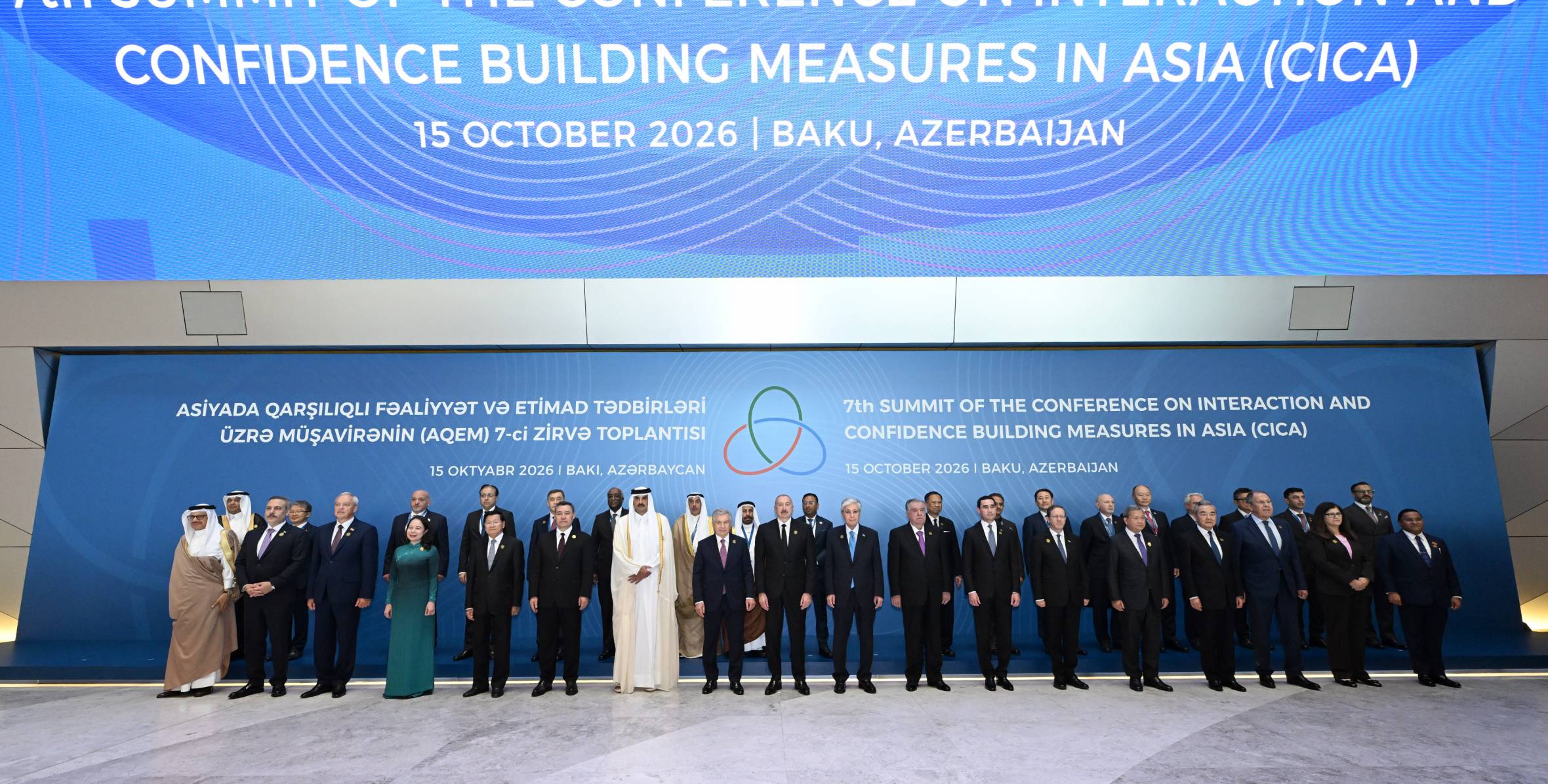
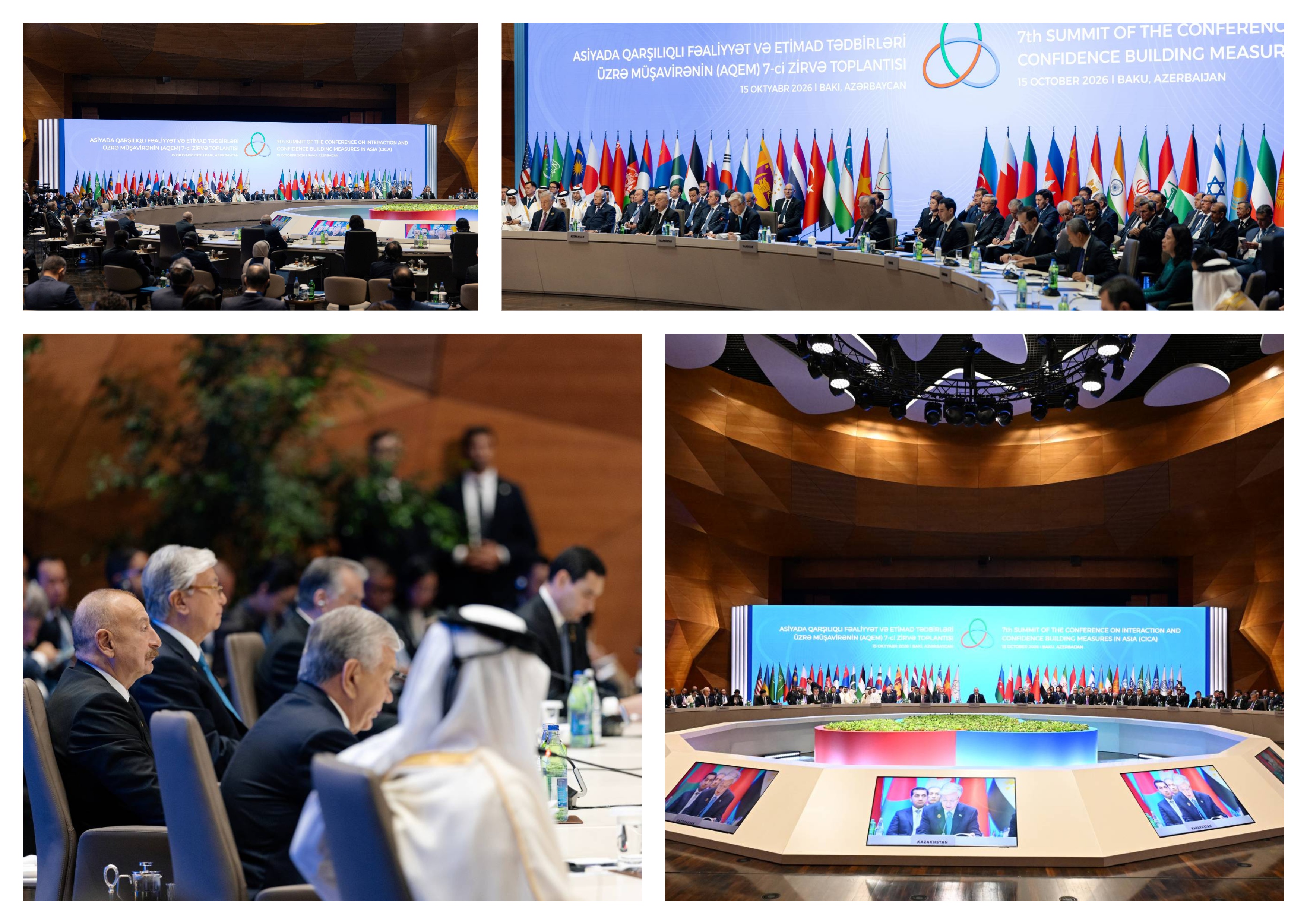
Baku, 15 October 2026 – The capital of the Republic of Azerbaijan hosted the Seventh Summit of the Conference on Interaction and Confidence Building Measures in Asia (CICA). The Summit highlighted CICA’s key achievements in the transformation process launched at the 2022 Astana Summit and reviewed the results of Azerbaijan’s two-year Chairmanship, held under the theme “Stronger CICA: Connectivity, Digitalization and Sustainable Growth in Asia”.
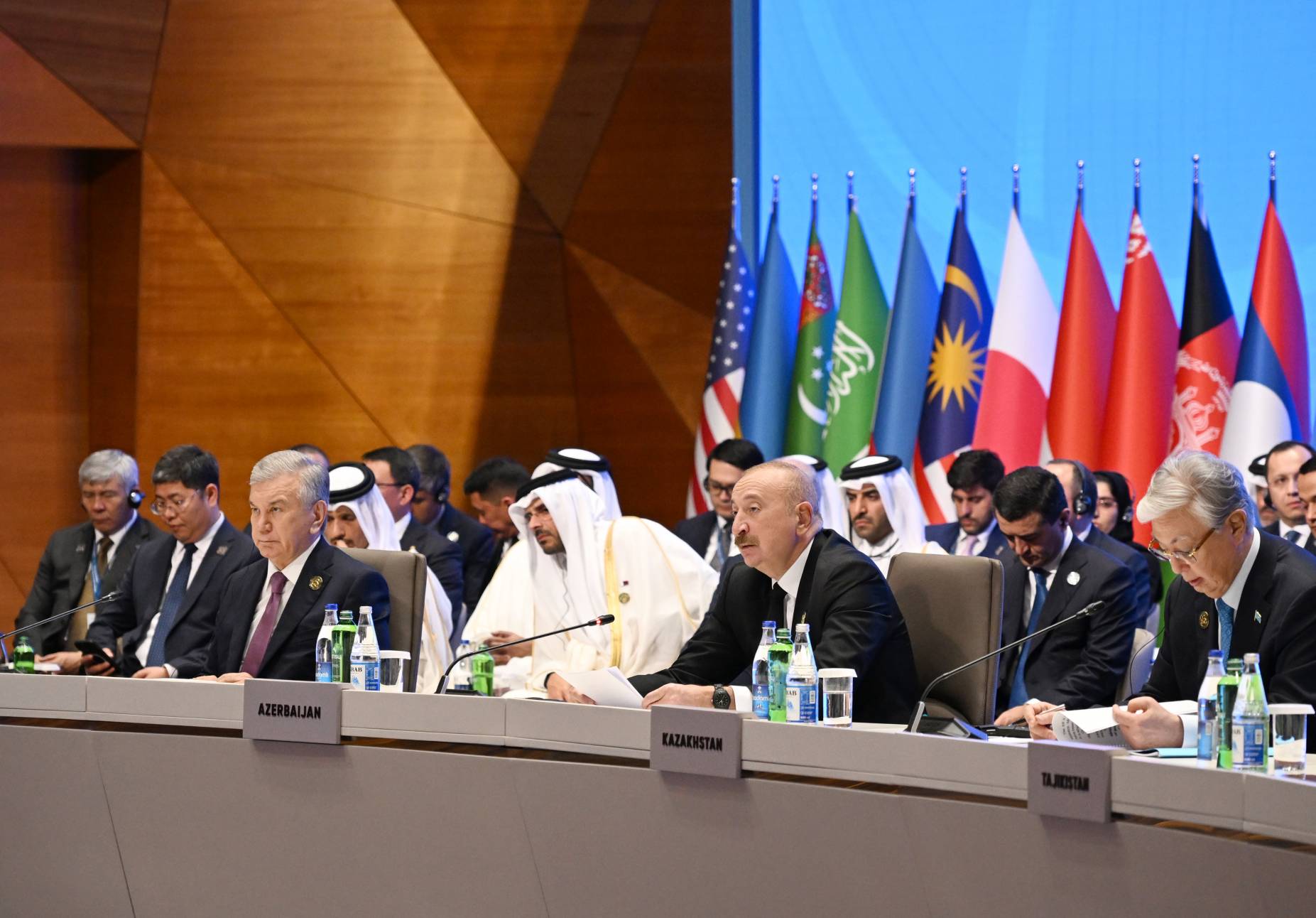
Opening the plenary session, President Ilham Aliyev of Azerbaijan noted that, amid a global security crisis, equitable multilateral dialogue, in which regional formats effectively complement the efforts of the United Nations, is becoming crucial. In this context, according to the Azerbaijani leader, CICA’s role as a reliable confidence building platform is growing. Guided by the “peace through development” formula, Baku focused its Chairmanship efforts on transport connectivity and the digital and environmental agendas, underpinned by the institutional strengthening of CICA (full text of the speech).
The CICA Member States reaffirmed their commitment to the Conference’s fundamental documents – the 1999 Declaration and the 2002 Almaty Act – which are based on the principles of equal partnership, consensus, mutual respect and the voluntary nature of confidence building measures.
Against the backdrop of a transforming global security architecture, a trust deficit and a crisis of multilateral cooperation, Summit participants underscored the central role of the United Nations and CICA’s growing contribution to ensuring peace in the region. This reinforced the Member States’ shared vision of making effective use of the Conference’s potential in the interests of stability and security in Asia.
As a practical step towards building a resilient security architecture within CICA, Kazakhstan called for the launch of the CICA Preventive Diplomacy Mechanism, noting that preventing emerging conflicts is more effective than post-crisis settlement.
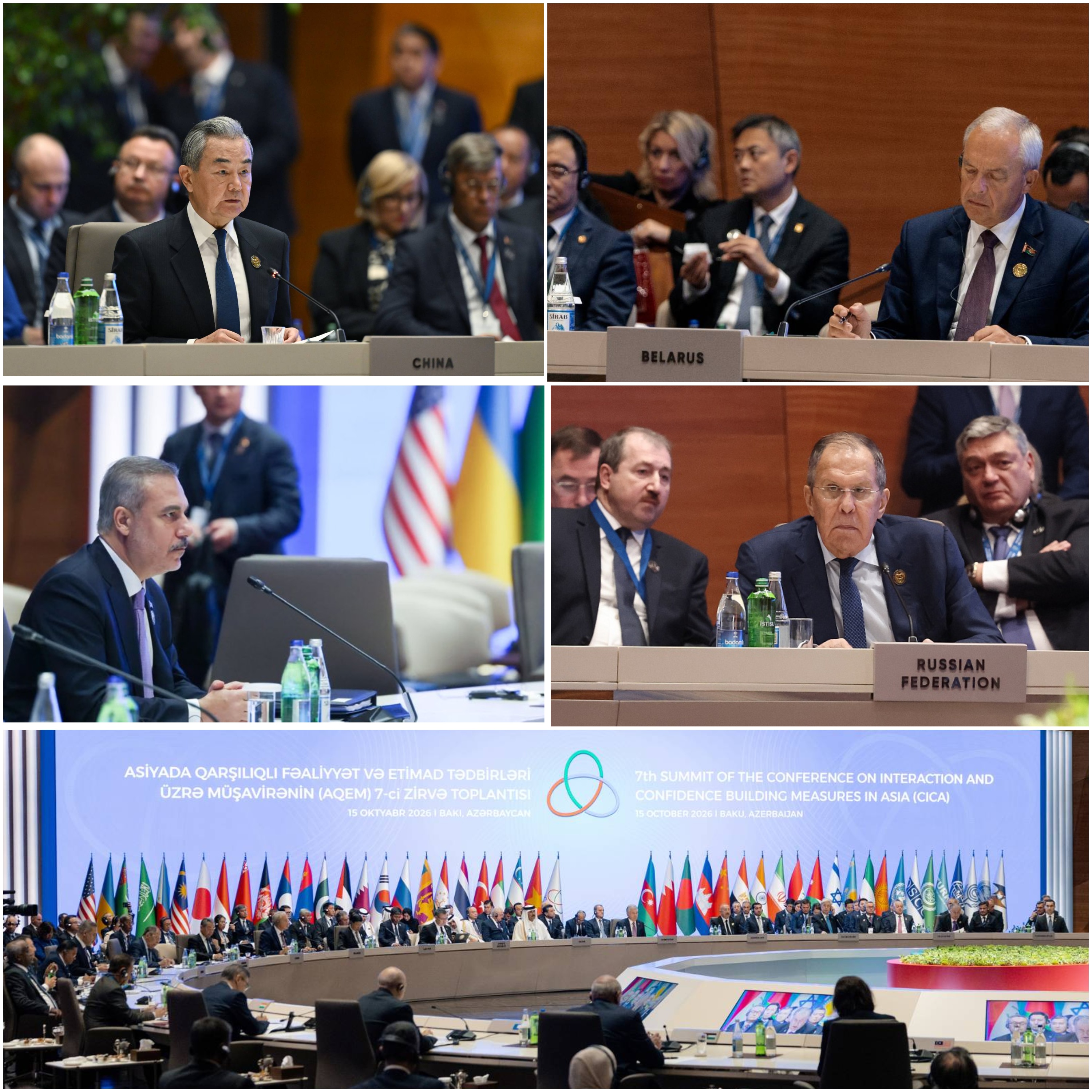
China highlighted the importance of CICA’s potential in ensuring common, comprehensive and cooperative security, as well as the need to strengthen the coordinating role of the United Nations (excerpts from the speech). Heads of delegation from South-East Asian countries set out similar priorities: Cambodia reaffirmed its commitment to the peaceful settlement of disputes to preserve regional stability, while Thailand advocated strengthening interregional dialogue through the CICA–ASEAN partnership.
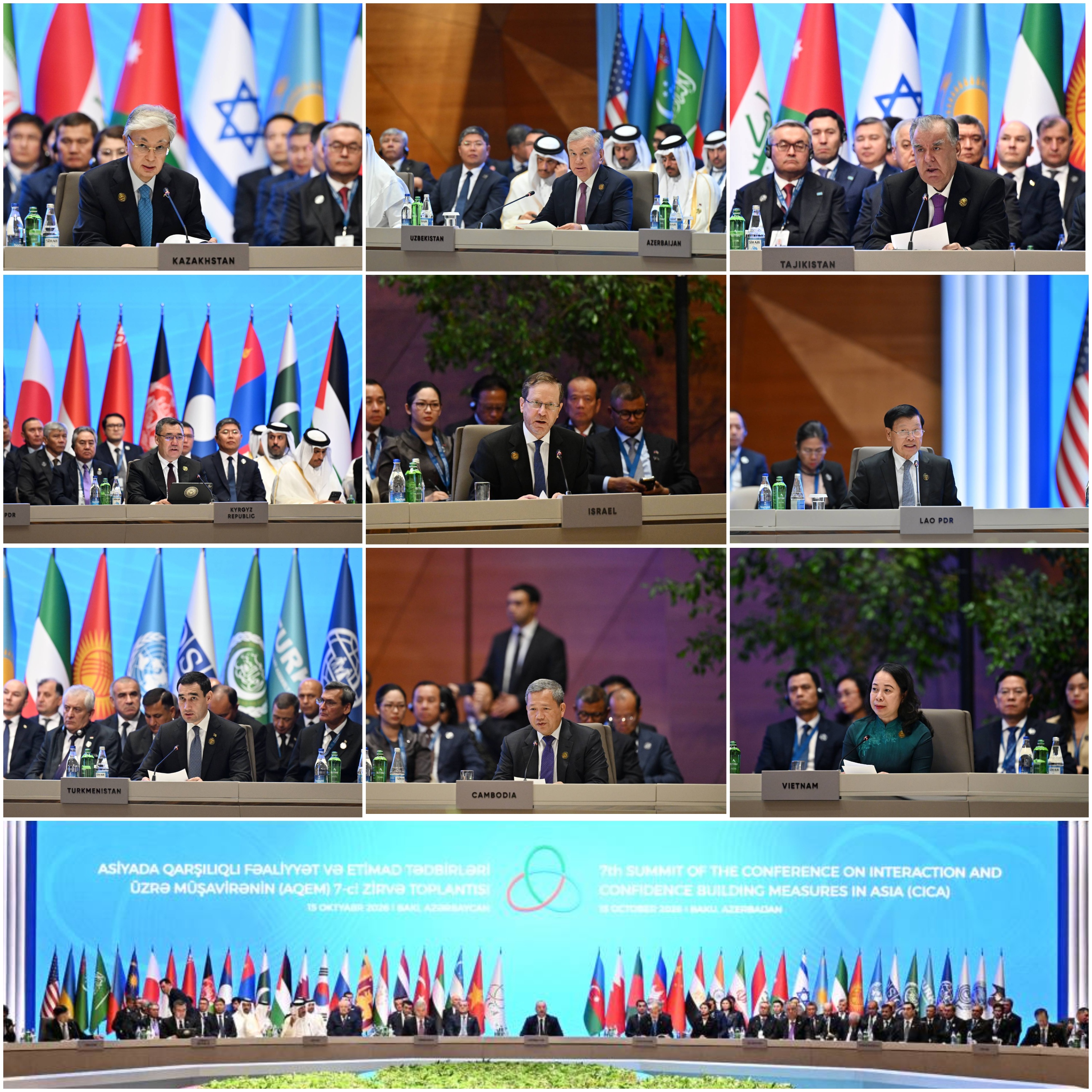
In the economic sphere, priority was given to regional connectivity. Participants recognized the growing importance of integrated, competitive and secure transport and logistics systems, as well as of the digitalization of transport. With a view to putting this into practice, the Summit focused on large-scale transcontinental projects.
As a step towards building a unified logistics backbone for the region, Kazakhstan put forward an initiative to develop a comprehensive CICA Strategy on Transport Connectivity, designed to create synergies between the Middle Corridor, the North–South route and the Belt and Road Initiative.
China proposed deepening the alignment of infrastructure development under the Belt and Road Initiative with the national development programmes of CICA countries, calling for trade liberalization, resilient transport arteries and uninterrupted supplies of raw materials, energy and food.
Kyrgyzstan called for strengthening physical logistics capacity in the region as a matter of priority (excerpts from the speech), while Uzbekistan proposed establishing an “Infrastructure of Trust” designed to set new standards for long-term energy and trade partnership (excerpts from the speech).
In addition, Member States noted the critical role of small and medium-sized enterprises (SMEs) as engines of economic growth. In this context, the Summit welcomed the work of the CICA Business Council and the CICA Business Forum aimed at enhancing the competitiveness of SMEs, developing women’s entrepreneurship, advancing digitalization and supporting the transition to low-emission development.
Expanding the role of tourism and developing financial partnerships were identified as additional drivers of growth. Participants welcomed the establishment and launch of the CICA Finance Summit as a new institutional platform for strengthening financial connectivity.
In the energy sector, Summit participants set as priorities strengthening energy security, protecting critical cross-border infrastructure and reaffirming the right of all Member States to develop and use nuclear energy for peaceful purposes.
Environmental issues and sustainable development featured prominently in the discussion, with participants noting that climate conditions have a significant impact on sustainable growth. Participants emphasized the need to make effective use of CICA’s environmental dimension for practical cooperation and the exchange of experience, with a focus on the vulnerabilities of mountainous and landlocked countries. The leaders of CICA countries noted that the transboundary nature of climate and environmental challenges requires close coordination of regional and international efforts to protect Asia’s ecosystems.
 Kazakhstan presented an initiative to establish a CICA Water Partnership to promote technology exchange, joint research and the deployment of water-saving solutions. In a broader context, participants also noted Astana’s initiative to establish an International Water Organization within the United Nations system, which other CICA Member States could join (excerpts from the speech).
As coordinator of the “sustainable development” priority area of CICA’s environmental dimension, Thailand expressed its readiness to use its 2028 ASEAN Chairmanship as a “bridge” between the two organizations to advance environmental initiatives and strengthen institutional ties.
Tajikistan identified as a priority the promotion of global initiatives on water use and glacier preservation under the Dushanbe Water Process, calling on CICA Member States to make active use of the platforms of the 2028 United Nations Water Conference in Dushanbe to set new benchmarks for global cooperation (excerpts from the speech).
Under the human dimension, participants placed particular emphasis on inclusive dialogue, women’s leadership and the youth agenda.
The Summit specifically noted the need to expand the role of women and ensure their full participation in social, economic and cultural life. As a practical step towards promoting equal opportunities, coordination and the exchange of experience in this area, Member States welcomed the establishment and launch of the CICA Women Council, designed to serve as an effective mechanism for strengthening women’s leadership in the region.
The leaders of CICA Member States also pointed to the growing role of young people, recognizing youth engagement as an important element in strengthening people-to-people contacts and advancing sustainable development. Emphasis was also placed on unlocking the scientific potential of young people through academic exchange. In this regard, Summit participants welcomed the operationalization of the Partnership Network of Leading Universities of CICA nations.
In addition, the meeting underscored the importance of engaging think tanks in developing expert solutions for sustainable growth, as well as the key role of the CICA Think Tank Forum in strengthening partnerships among research institutions and finding responses to regional challenges.
To advance these priorities, Member States put forward a number of practical initiatives. In particular, Tajikistan stressed the importance of “people’s diplomacy” and of expanding the mandate of the CICA Youth Council. Russia highlighted the importance of developing the volunteer movement and volunteerism as a key driver of civic responsibility (text of the speech). To intensify academic exchange and expand scientific mobility, Kazakhstan proposed launching a scholarship programme for students and young researchers from Asian countries.
The CICA Human Development Forum, which Uzbekistan offered to host in 2027, is expected to make a practical contribution to developing human potential. China advocated strengthening CICA’s capacity in emergency prevention and healthcare.
Given global trends and the rapid pace of technological development, CICA countries stressed the need to step up cooperation on artificial intelligence (AI) to jointly manage risks and foster a secure digital environment.
Kazakhstan advocated CICA’s active participation in developing global AI standards under the auspices of the United Nations. The future ESCAP Digital Solutions Centre in Almaty, in whose work all CICA Member States have been invited to take part, was identified as a practical mechanism for such cooperation.
Bangladesh called for strengthening direct contacts between the relevant ICT institutions of Member States and developing CICA confidence building measures to shape a safe, open and secure digital space.
To bridge the technology gap and ensure the responsible use of artificial intelligence, Uzbekistan proposed establishing a CICA Expert Panel on Technological Security, designed to develop common recommendations and rules in the field of digital development.
A landmark outcome of the Seventh Summit was the expansion of CICA’s membership: by unanimous decision of the Member States, the Lao People’s Democratic Republic became a full member of the Organization. This step reflects the steady growth of trust in CICA and the rising standing of the Organization, which has grown from a 1992 initiative to 16 States at the first Summit in 2002 and 29 Member States at the recent Summit in Baku.
A major milestone in developing CICA’s legal personality was the ratification of the Convention on the Privileges and Immunities of the Secretariat by the Senate of Cambodia at the end of September 2026, which secured the number of ratifications required for the Convention’s entry into force. (The Convention will enter into force on 8 November 2026, 30 days after Cambodia deposited its instrument of ratification at a ceremony held in Baku on 14 October 2026).
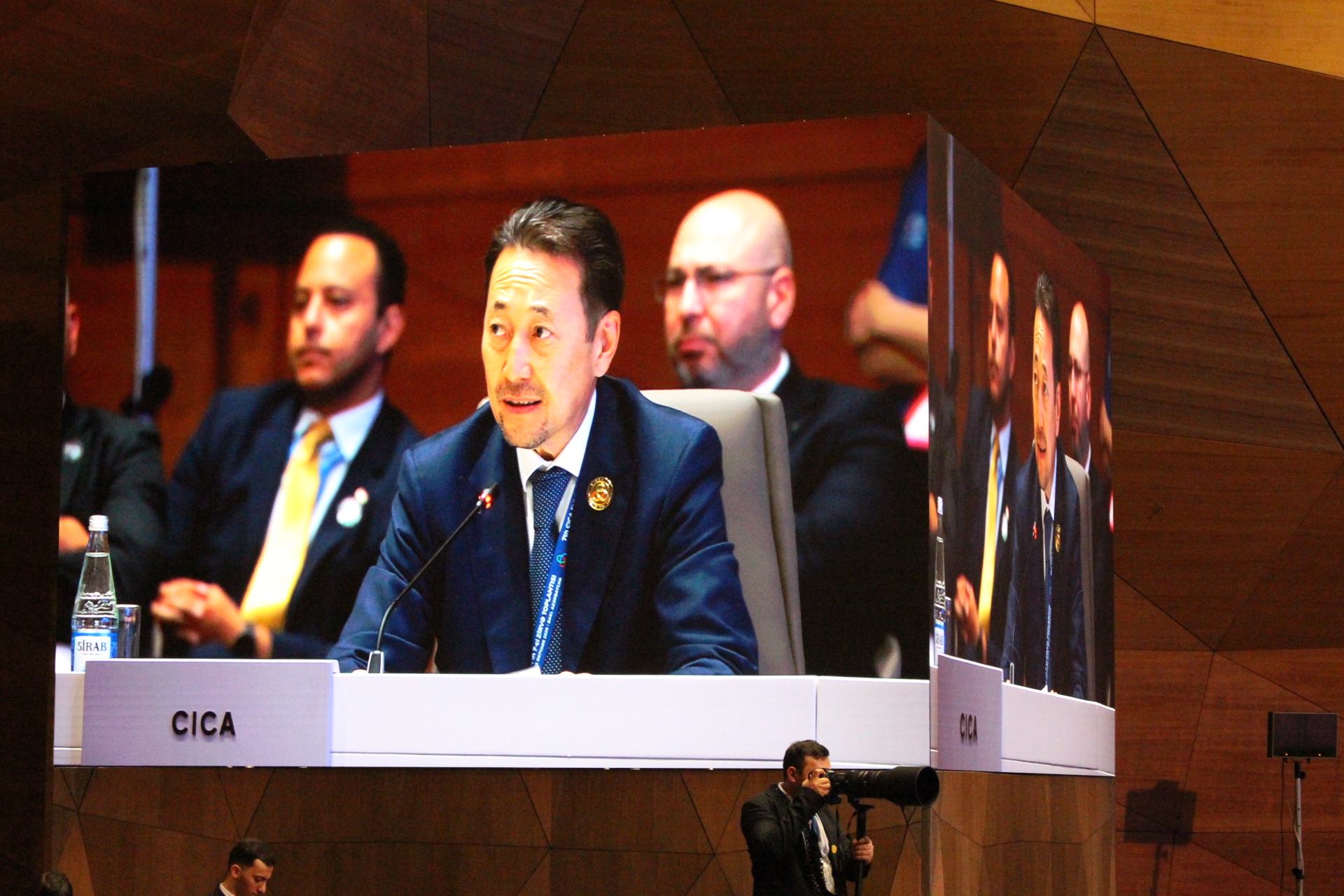
The CICA Secretary General, whose term as head of the Secretariat was coming to an end, presented his report to the Summit. Member States expressed their gratitude to Secretary General Kairat Sarybay for his effective leadership and efforts to advance the CICA agenda in practical terms (full text of the speech).
Participants approved the appointment of Ambassador Sultan Hajiyev, nominated by Azerbaijan, as the new CICA Secretary General for the next four years.
The Seventh CICA Summit concluded with the adoption of the Baku Declaration, which clearly demonstrated the solidarity of Member States on key issues of Asian and global security.
Participants also endorsed the Statement on Cooperation in the Field of Occupational Safety and Health, a joint initiative of China and Azerbaijan aimed at practical cooperation among Member States in this area.
Expressing their gratitude to the Republic of Azerbaijan for its successful Chairmanship, CICA Member States decided to extend Azerbaijan’s mandate as Chair for the period 2026–2028. Summit participants commended the efforts of the Chairmanship of the Republic of Azerbaijan towards the effective, results-oriented implementation of confidence building measures and the strengthening of the Organization’s institutional capacity.
The outcomes of the Baku Summit have laid a solid foundation for expanding multilateral partnership in Asia, reaffirming CICA’s steady course towards its further transformation into a fully fledged international organization capable of responding promptly to contemporary global challenges.
