
St. Petersburg, 23-24 July 2026 – The Third International Conference on Countering Crimes Committed Using Information and Communication Technologies (ICT) – ICT-Crime 2026, held under the auspices of the Interagency Organizing Committee, brought together representatives of federal authorities, the Russian business community, as well as academic and public circles.
This year, the forum reaffirmed its role as a recognized platform for dialogue, with its relevance continuing to grow rapidly amid global digital transformation and new cross-border challenges.
Speaking at the forum’s opening ceremony, Secretary General of the Conference on Interaction and Confidence Building Measures in Asia (CICA) Ambassador Kairat Sarybay emphasized that digital transformation offers unprecedented opportunities for innovation, economic growth and improved quality of life, while also giving rise to new, multidimensional and cross-border challenges.
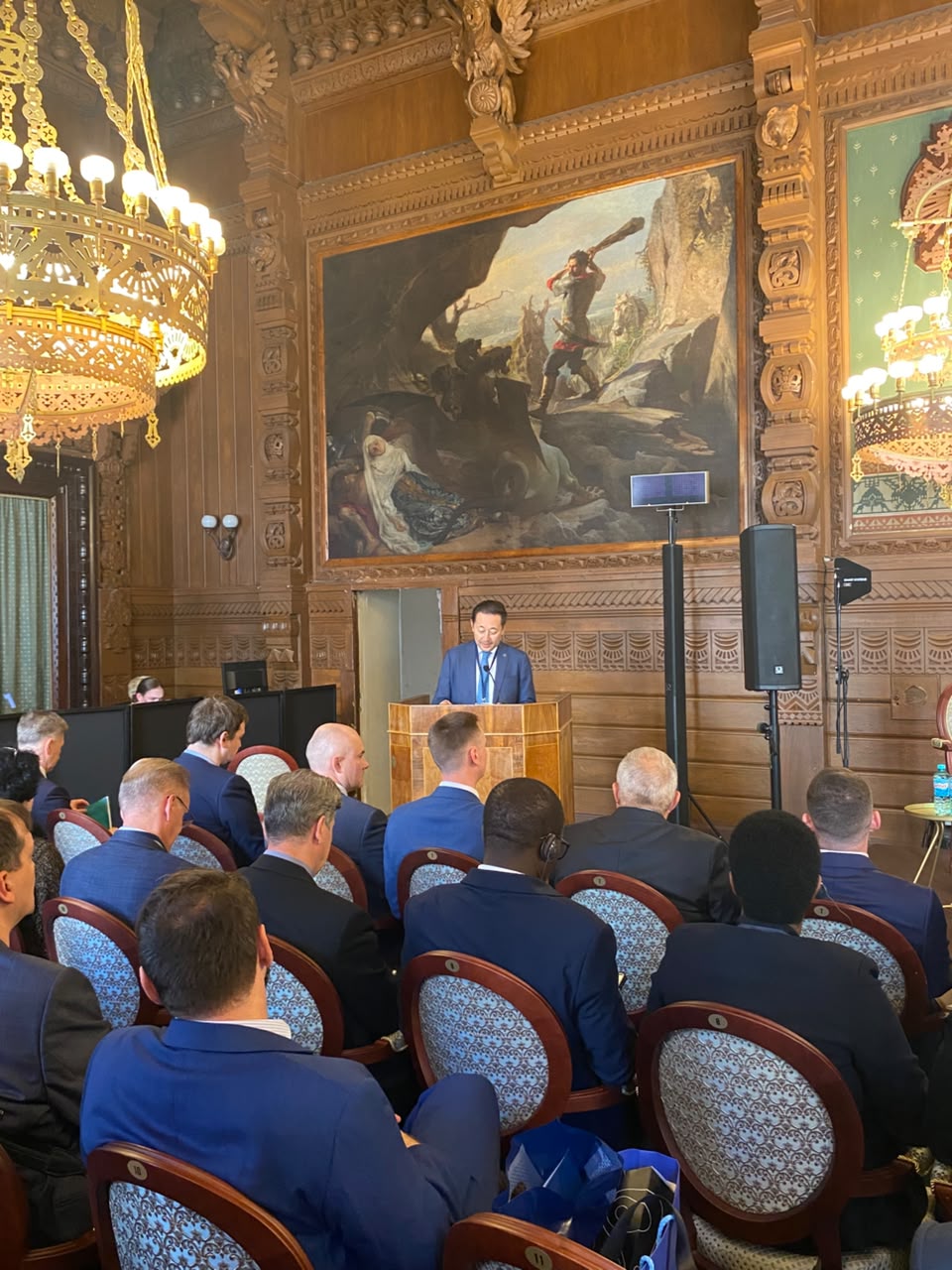
In this context, Kairat Sarybay underscored the key role of the synergy of efforts at all levels, noting that effective action against cybercrime is impossible without concerted efforts by states, international organizations, the expert community and the private sector.
During the plenary session, participants held a substantive discussion on countering crimes committed using ICTs and developing practical measures to improve the effectiveness of international information exchange and intergovernmental cooperation in this area.
Building on the tradition established last year, the Russian Federation, as coordinator of the priority area “Security of and in the use of ICTs”, organized a workshop on the margins of the ICT-Crime 2026 Forum with the participation of CICA Member States to further exchange experience in countering the use of ICTs for criminal purposes.
The event was moderated by Deputy Director of the Department of International Information Security of the Russian Ministry of Foreign Affairs and a member of the Conference’s Interagency Organizing Committee Ernest Chernukhin.
Special Representative of the President of the Russian Federation for International Cooperation in the Field of Information Security and Director of the relevant department at the Russian Foreign Ministry Artur Lyukmanov stressed that Russia is consistently promoting the information security agenda at both the global and regional levels. The speaker described strategic cooperation with international partners as an important element of this multifaceted work, noting that one of the practical manifestations of this has been the recent establishment of the Artificial Intelligence Coalition, a global alliance aimed at the joint development and regulation of AI technologies. This is complemented by another key development in global security – the UN General Assembly’s approval by consensus of the Convention against Cybercrime, developed at the initiative of the Russian Federation.
The discussion on strengthening international cooperation was continued by CICA Secretary General Ambassador Kairat Sarybay. Addressing the forum, he stressed that amid global cyber challenges, trust plays a significant role in ensuring security, and that the activities of CICA, bringing together 28 states and covering 90 per cent of Asia’s territory, have been guided by this principle for more than three decades.
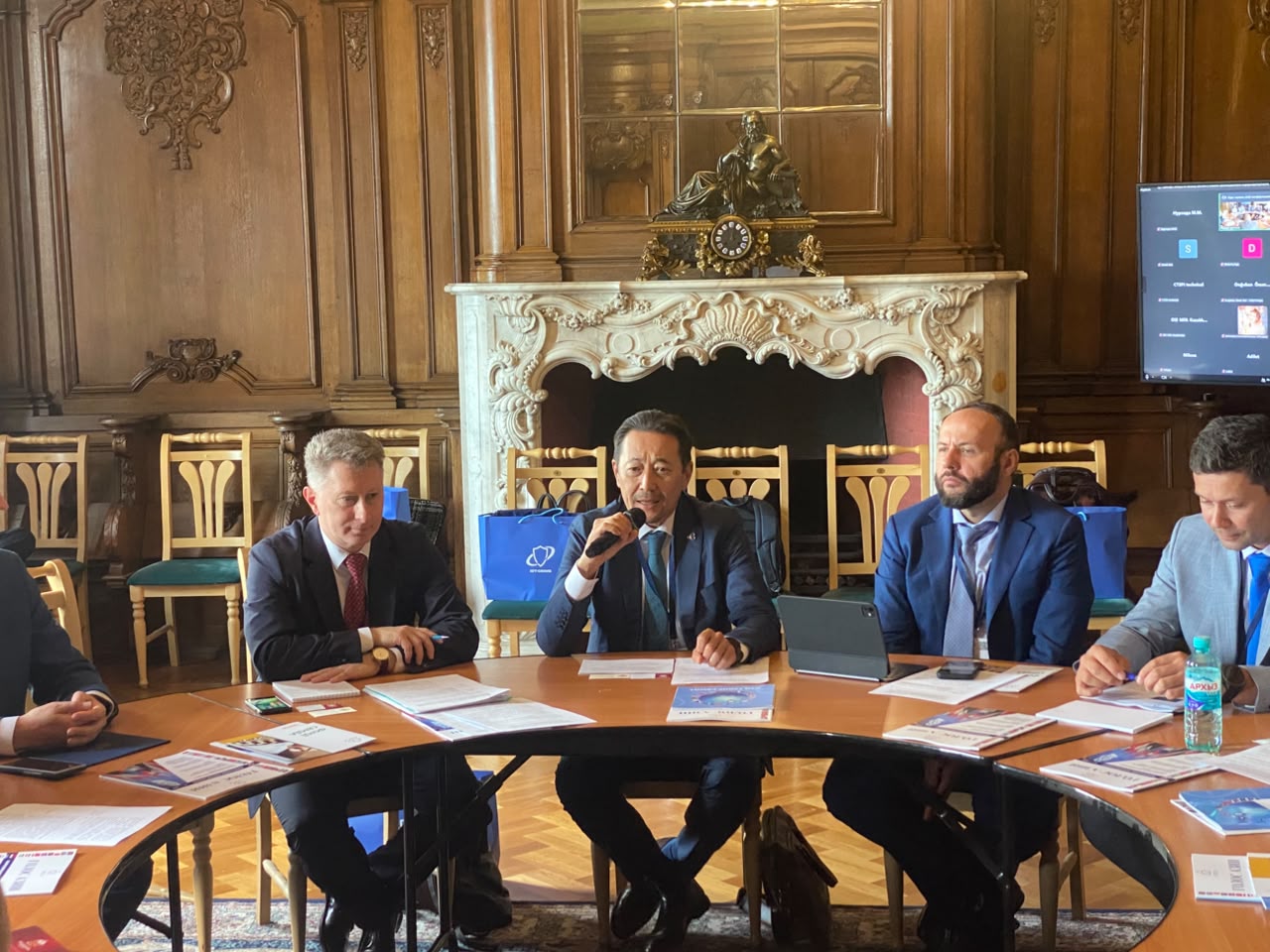
The Secretary General highlighted the inextricable link between regional efforts and the global security architecture. He noted that CICA’s activities naturally complement the UN agenda and are aligned with such steps by the international community as the adoption of the Convention against Cybercrime and the launch of the Global Mechanism on developments in the field of ICTs, the first substantive session of which is being held concurrently at the UN Headquarters in New York.
Kairat Sarybay commended Russia’s efforts as coordinator of the priority area “Security of and in the use of ICTs” under the new challenges and threats dimension of CICA. As an example of successful work, he cited the CICA Leaders’ Statement on Cooperation in the Field of Security of and in the Use of ICTs, the draft of which was prepared by the Russian side and adopted at the Sixth Summit in 2022.
Kairat Sarybay pointed out that the endorsement of such approaches first within CICA and subsequently through the adoption of the relevant Convention by the UN suggests that the regional format has the potential to project its influence onto the global level.
The topic of international cooperation was further explored by UNODC expert Markus Stemeseder. He briefed the participants on the current status of the Convention against Cybercrime, which was opened for signature in Hanoi in October 2025 and has already been joined by more than 75 countries. The expert called on states to engage in substantive work to ensure the practical implementation of the document.
Discussions during the workshop’s four thematic sessions confirmed the high level of interest among CICA countries in deepening practical partnership: the participants exchanged experiences in responding to cross-border cyberattacks, discussed ways to harmonize legislation and improve digital literacy, and addressed challenges related to the use of artificial intelligence for terrorist purposes.
The workshop reaffirmed the relevance of CICA as an effective multilateral platform that facilitates the exchange of experiences, the strengthening of professional ties and the promotion of practical cooperation among Member States.
