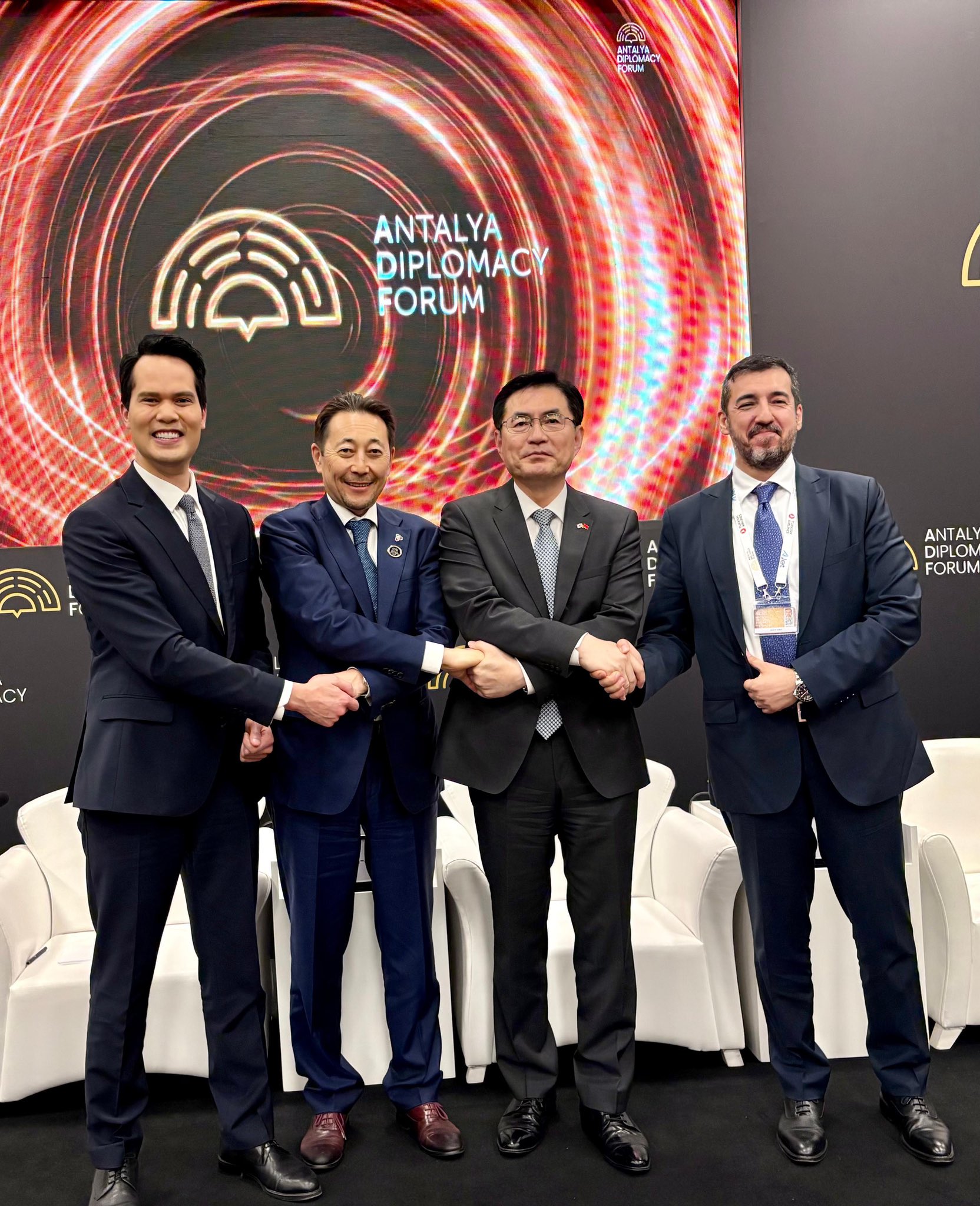
Antalya, 17-18 April 2026 – Navigating a dynamic global environment, the Antalya Diplomacy Forum (ADF) convened leaders to tackle today's most urgent challenges. CICA Secretary General Ambassador Kairat Sarybay joined the high-level discussions to ensure the voice of Asian multilateralism remains front and center.
Secretary General Sarybay addressed the premier diplomatic platform at the panel session on the “Asia-Pacific Security Equation: Managing Competition” and reflected the current geopolitical dynamics in the broader region. He noted that today's geopolitical reality is increasingly shaped by the growing influence of the middle powers, acting alongside major powers across the 194 UN Member States.
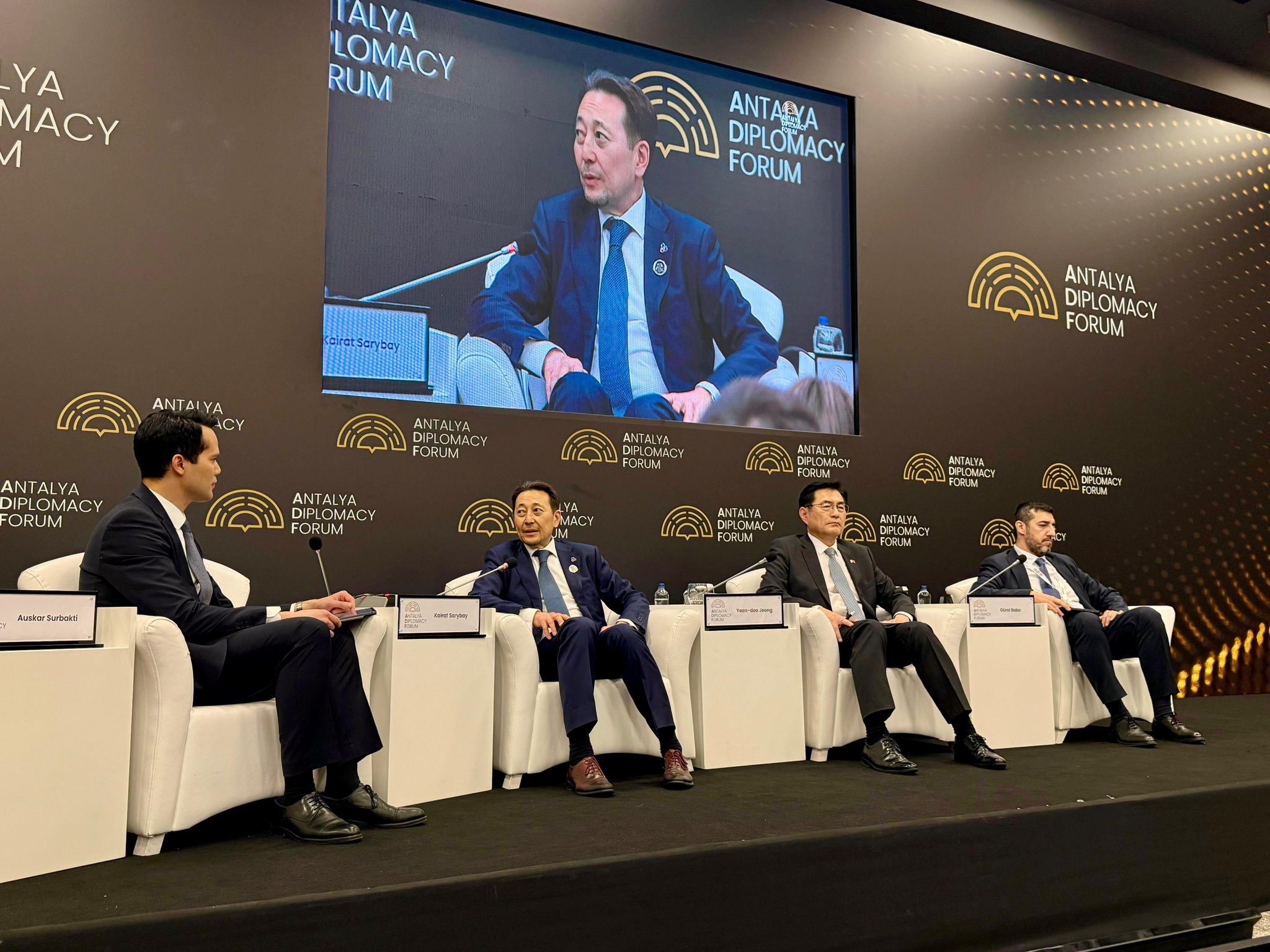
Advocating for a shift away from confrontational mindsets, Secretary General Sarybay called for a return to the “wisdom of coexistence”. He underlined that inevitable state competition can only remain constructive when anchored in international law and the UN Charter that carefully balance national interests.
In this context, Secretary General Sarybay emphasized that multilateral platforms play a vital role by providing a space for continuous dialogue, fostering mutual understanding, and preventing conflicts. Here, he shared the example of CICA as an organization that was initiated by a middle power. He added, today the framework of 28 Member States proves how multilateral platforms can effectively navigate geopolitical sensitivities and sustain practical cooperation.
Continuing his focus on regional cooperation, Secretary General Sarybay recognized ASEAN as another successful model of integration due to its proven ability to turn past competition into lasting cooperation.
He also mentioned that this approach aligns with CICA’s own commitment to building trust and confidence.
Broadening the scope, Secretary General Sarybay stressed the need for a multi-layered architecture in Asia where CICA and other Asia-based organizations mutually reinforce one another and achieve synergy.
To advance this vision, he invited executives of 10 international organizations in Asia to convene in Astana, marking the 20th anniversary of the CICA Secretariat, to exercise mapping of responsibilities of multilateral fora in the continent.
Secretary General Sarybay engaged in a series of bilateral discussions at the forum, focused on CICA’s ongoing transformation and reinforcing a shared commitment to its institutional development and enhanced regional connectivity.
During a substantive meeting with Dr. Khalilur Rahman, Foreign Minister of Bangladesh, Secretary General Sarybay commended the country's active role in the CICA process and its support for the Azerbaijani Chairmanship's priorities. He also expressed deep appreciation for Bangladesh's shared emphasis on Asia’s role in global governance and its valuable contributions to the CICA Fund.
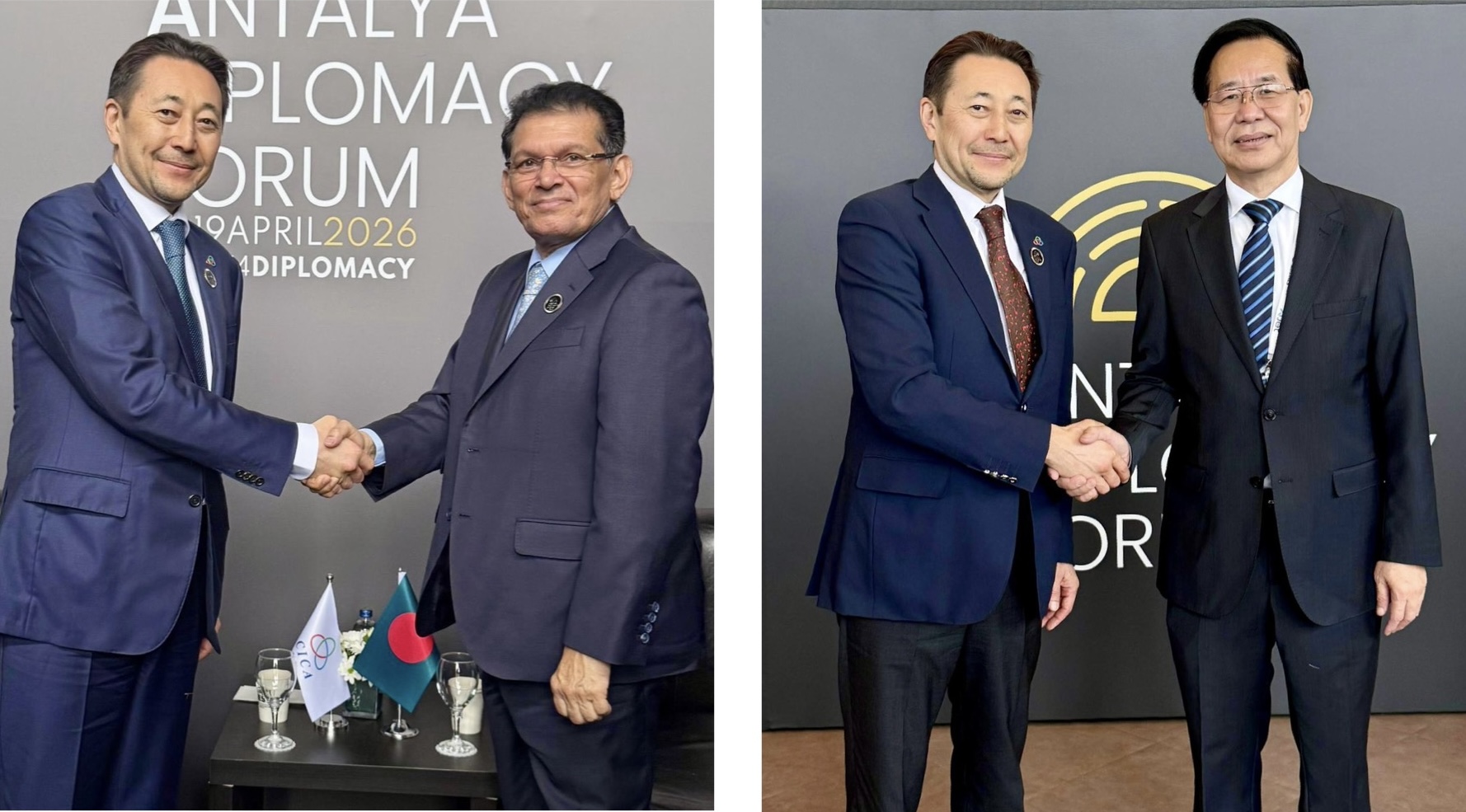
With Cambodia’s Secretary of State Meas Kim Heng, the dialogue centered on progress on CICA Charter and entry into force of the CICA Convention on Privileges and Immunities, with both parties agreeing to deepen Cambodia’s engagement in SMEs, tourism, and CICA-ASEAN interaction.
During the meeting with OSCE Secretary General Feridun Sinirlioğlu, Secretary General Sarybay briefed the counterpart on the preparations for the upcoming CICA Summit in Baku. He highlighted the OSCE’s role
as a longstanding observer and valued their continued engagement. The sides explored sharing best practices in preventive diplomacy and identifying synergies between Asian and European security frameworks to foster a more resilient and interconnected security architecture across the wider Eurasian space.
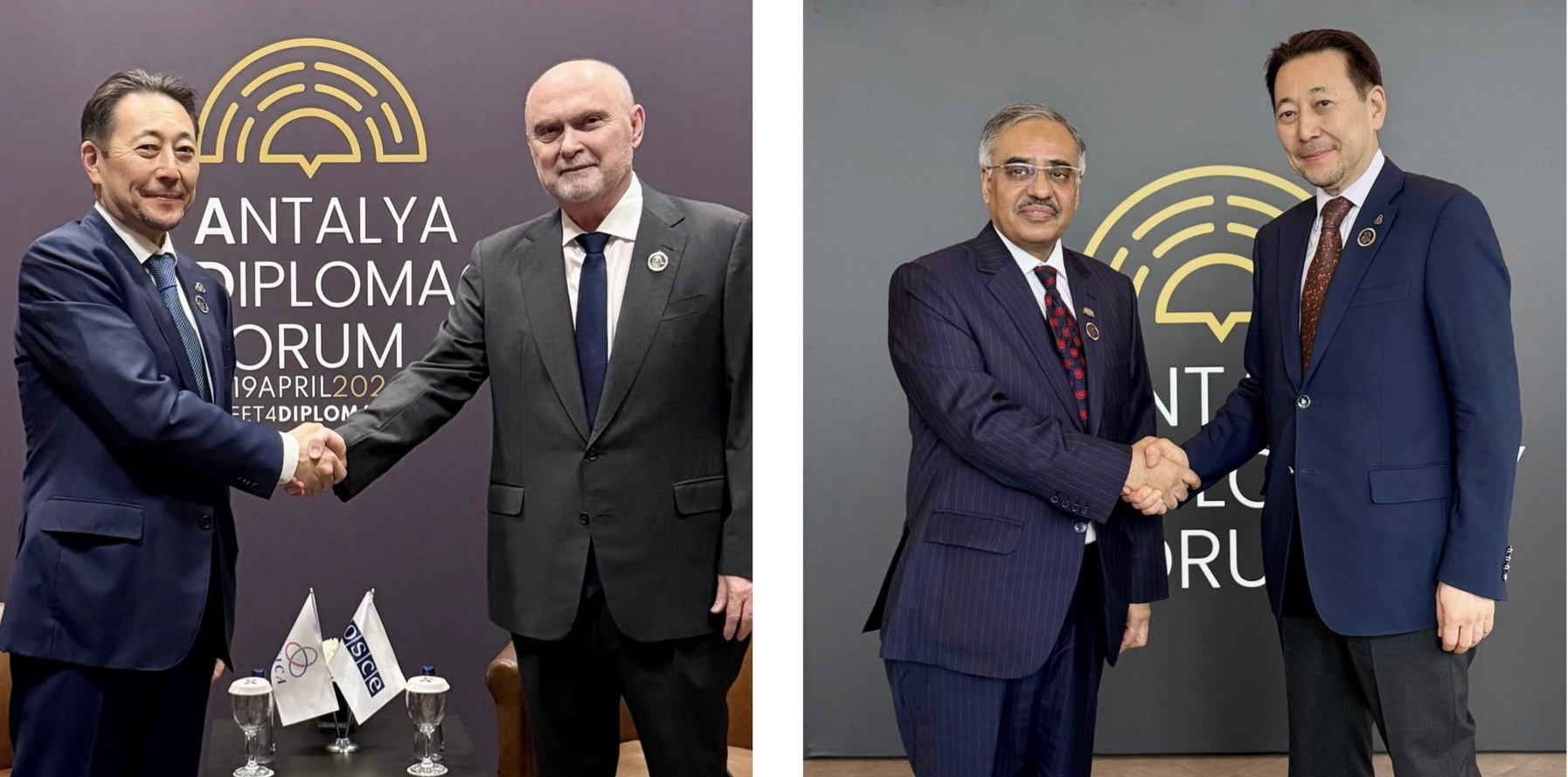
Secretary General Sarybay met with D-8 Secretary General Ambassador Sohail Mahmood to explore aligning the mandates and shared geographies to promote institutional synergy. The executives agreed to exchange successful models of cooperation across Asia, focusing on identifying common interests and sharing expertise in preventive diplomacy to foster a more resilient security architecture.
