Brief on The Nataraj
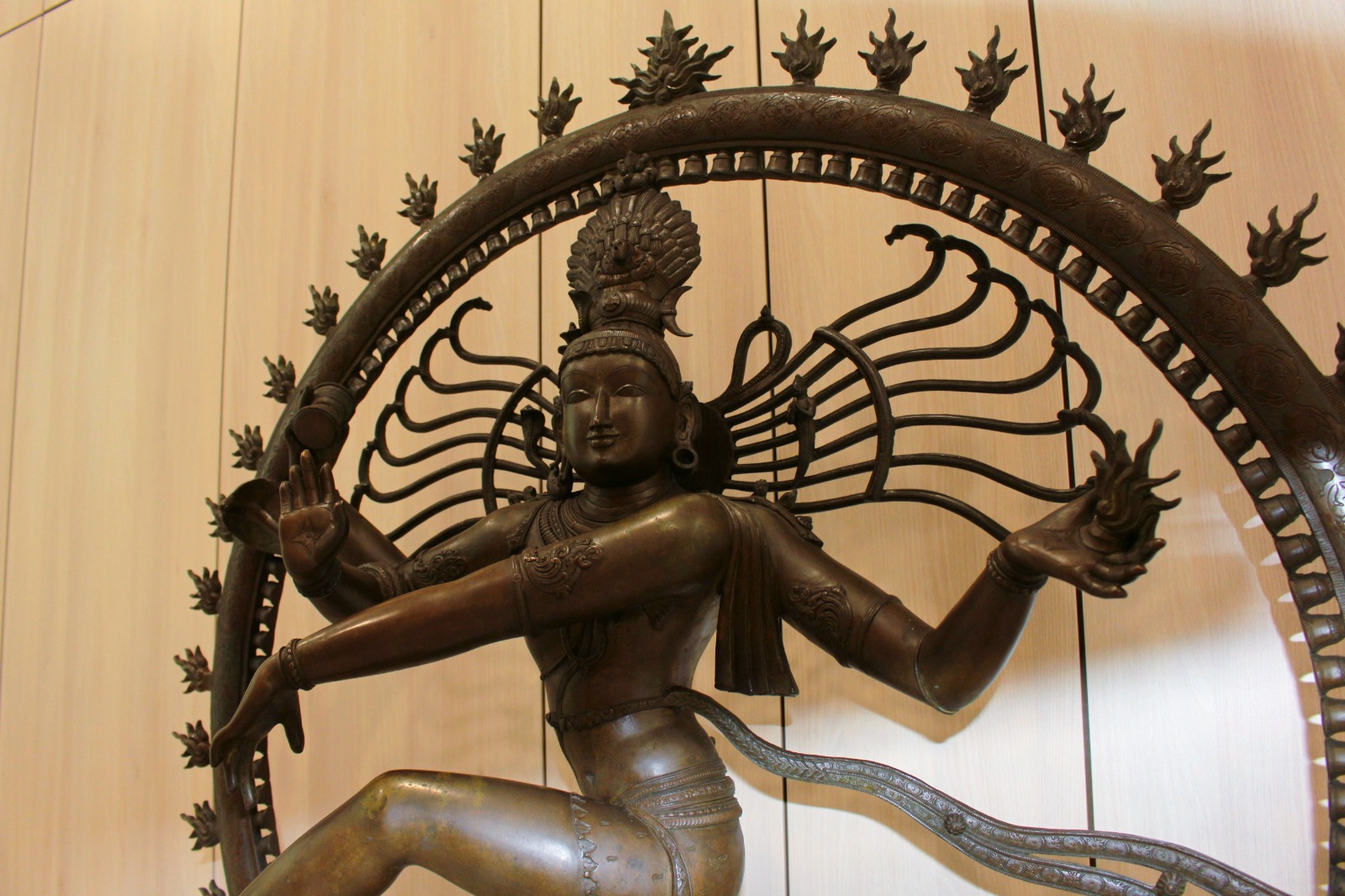
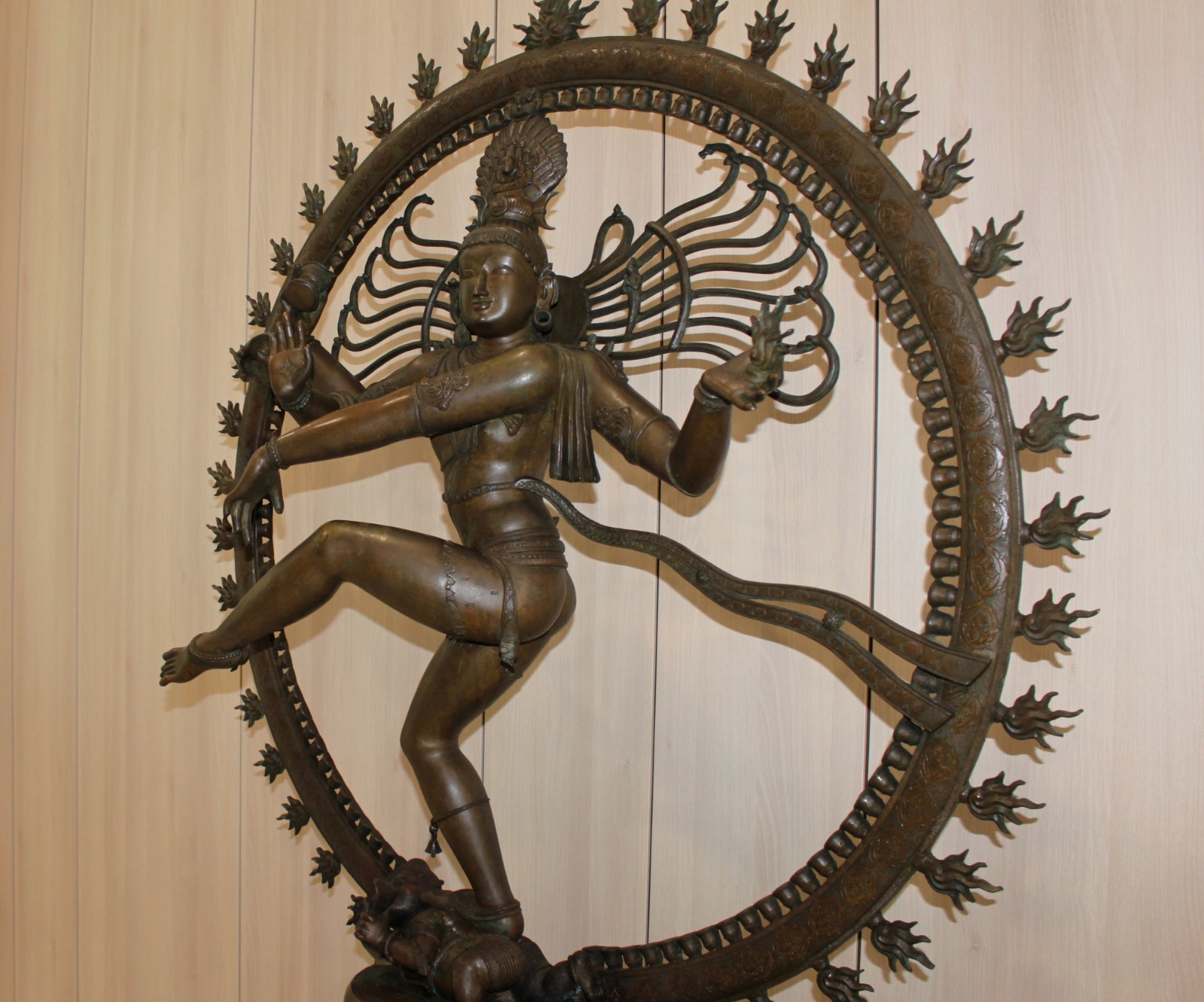
The magnificent form of Nataraja originated and flourished during the Chola dynasty in the Southern part of India between the 9th and 13th centuries CE. The bronze sculpture of Nataraja, representing Lord Shiva as the Cosmic Dancer, is one of the most iconic and profound expressions of Indian art and philosophy. The sculpture manifests Lord Shiva performing the Ananda Tandava, i.e the dance of bliss, within a ring of flames that symbolizes the eternal cycle of creation, preservation, and destruction. The left foot is lifted, which symbolises moksha i.e liberation, while the right foot presses down on the dwarf demon Apasmara, signifying the triumph over ignorance and ego. The upper right hand holds an Indian musical instrument Damru (drum), representing the sound of creation and the rhythm of time. The upper left hand bears fire, symbolizing destruction, making way for new beginnings. The lower right hand is in the Abhaya Mudra, offering reassurance and protection. The lower left hand points towards the raised foot, leading to the path of spiritual liberation. The countenance on the face reflects the deep stillness and inner balance amidst the cosmic dynamism.
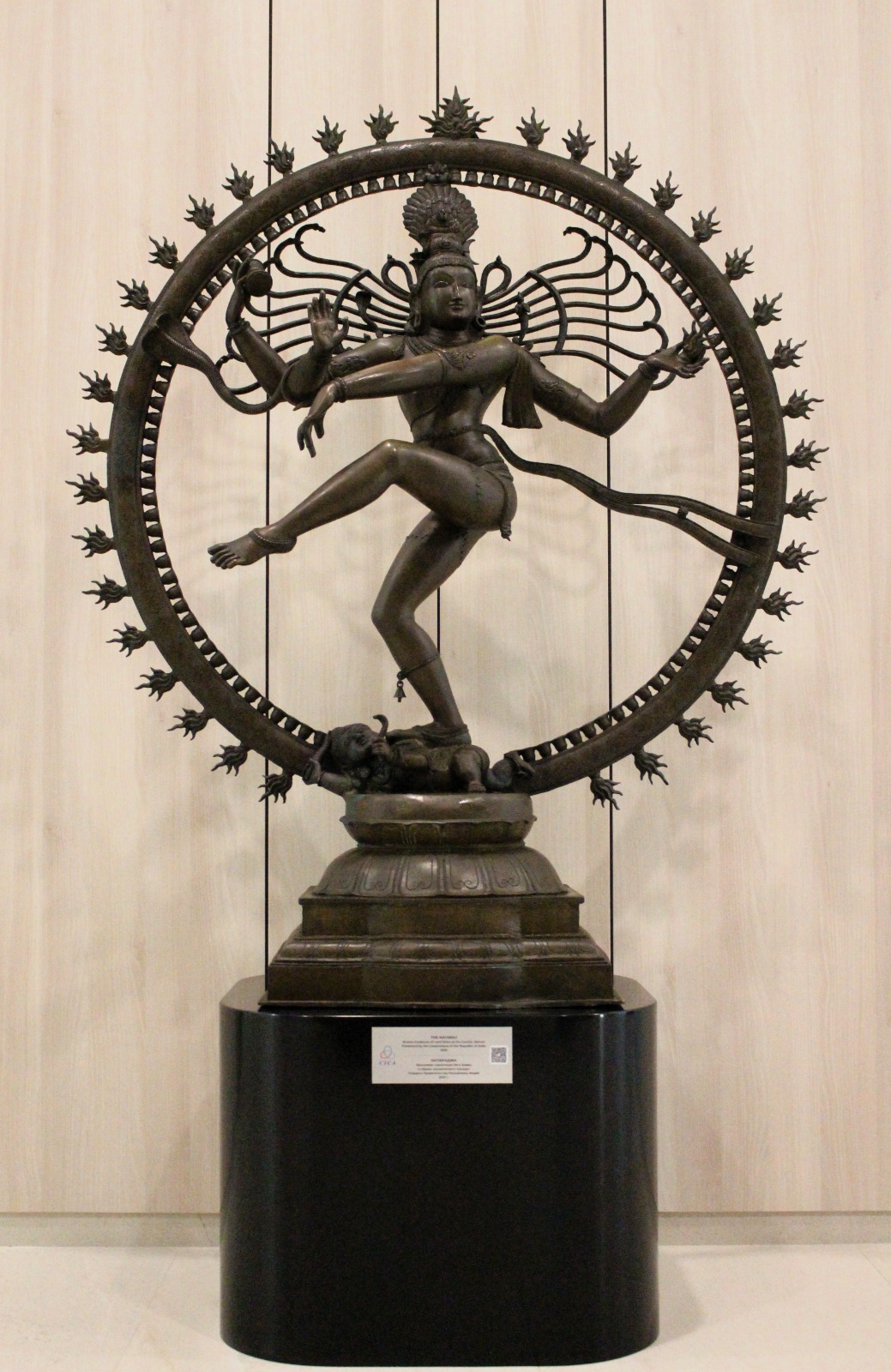
Sculptures, including the Nataraja, were traditionally crafted using the lost-wax casting method, also known as cire perdue method. Such artistic achievements are recognized today by UNESCO through the inscription of the Great Living Chola Temples as World Heritage Sites, which includes the Brihadeeswarar Temple in Thanjavur, the temple at Gangaikonda Cholapuram, and the Airavatesvara Temple in Darasuram. These temples not only exemplify architectural brilliance but also historically have been associated with Chola bronze icons, among which the Nataraja remains the most celebrated and enduring symbol.
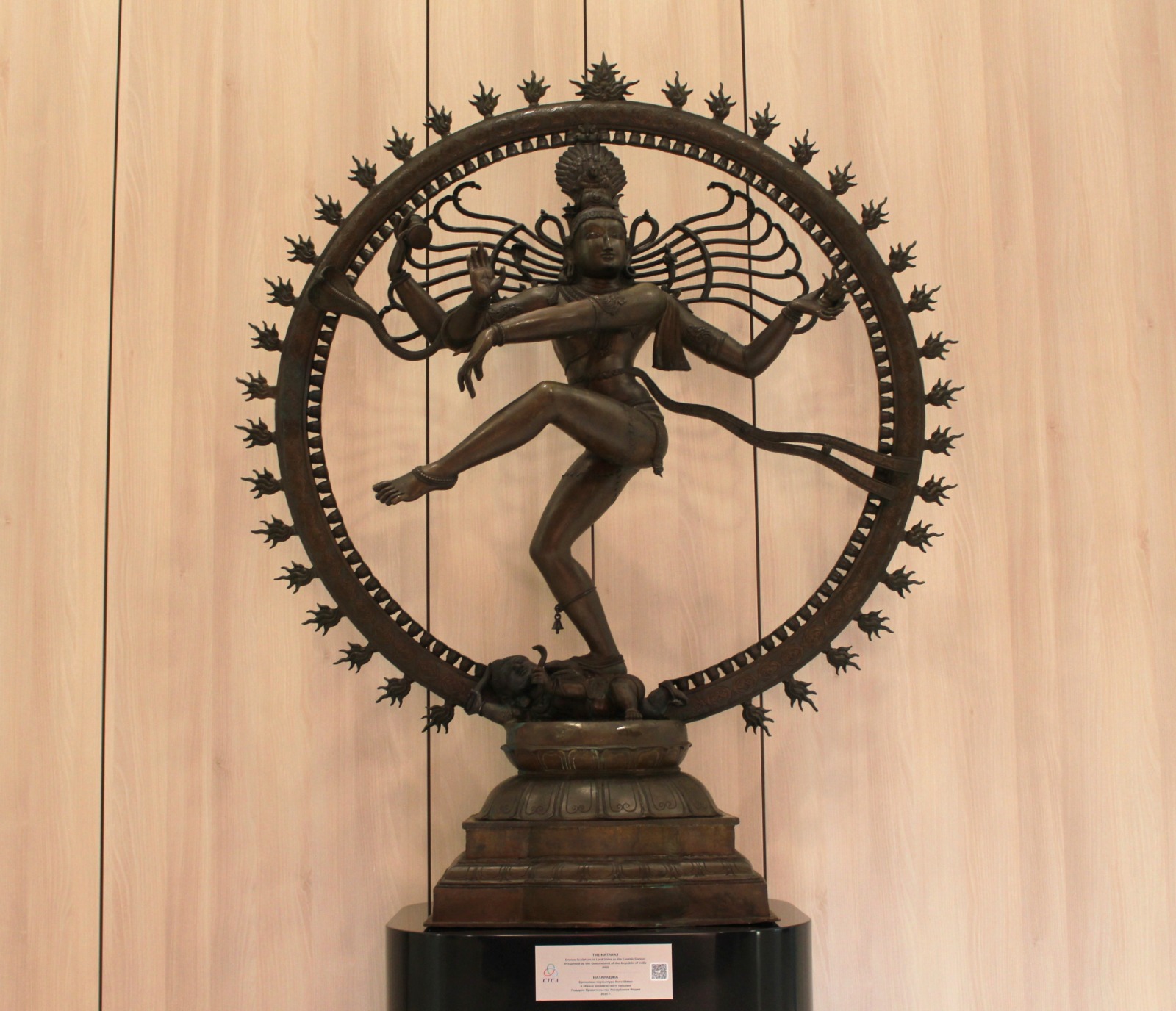
Beyond its spiritual and artistic significance, the Nataraja has also become a global cultural and philosophical symbol. A large bronze replica of Nataraja has been installed at CERN (European Organization for Nuclear Research) in Geneva, presented by the Government of India in 2004. It stands at the heart of a leading global scientific institution, symbolizing the deep connection between ancient Indian philosophy and modern scientific understanding. This gesture of cultural diplomacy highlights how the sculpture of Nataraja serves as a universal representation of cosmic harmony, balance, and transformation.
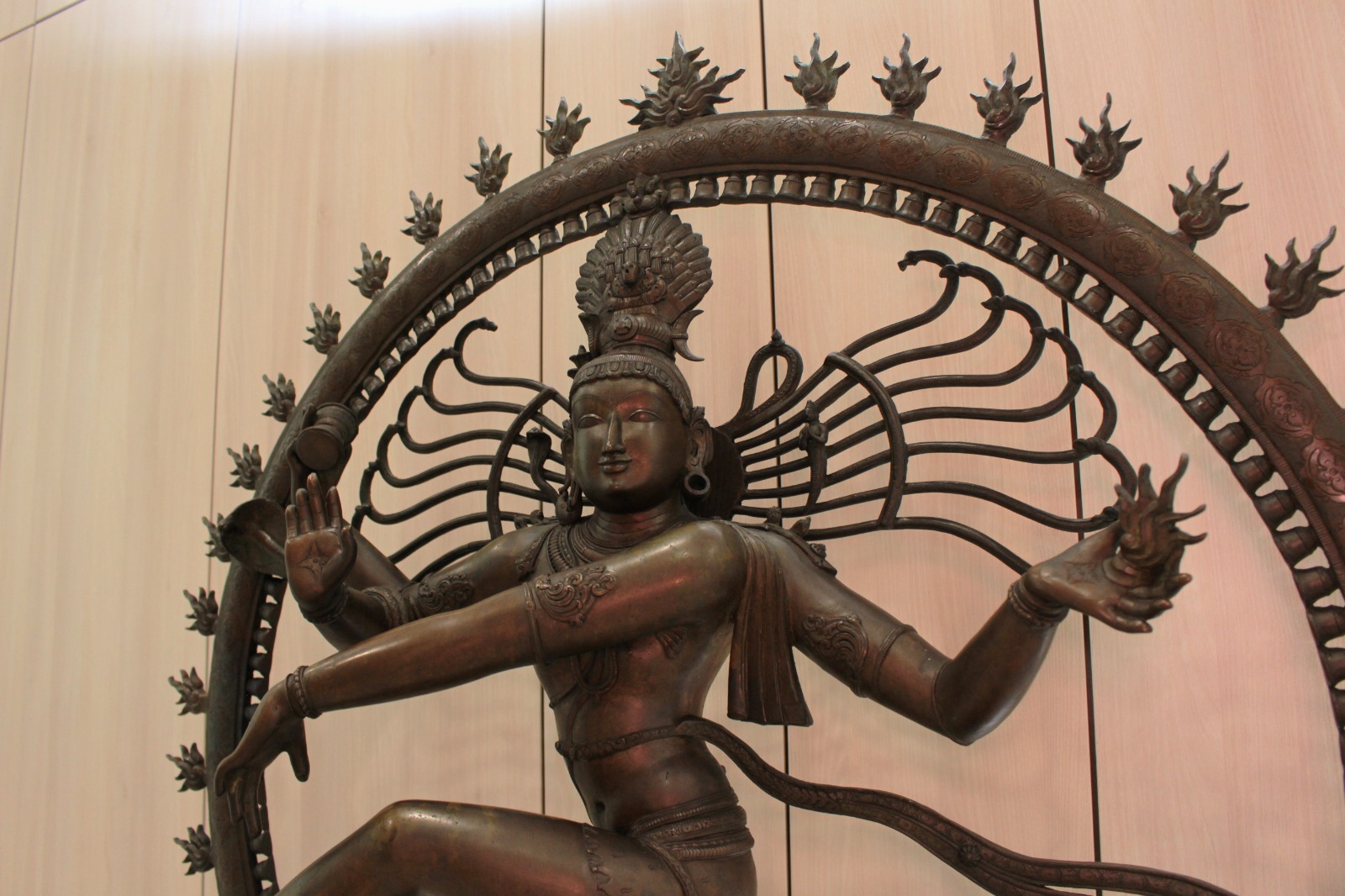
The Nataraja, thus reflects seamless integration of art, science, and spirituality, and continues to serve as a eternal symbol of the cosmic rhythm and unity that governs all existence.