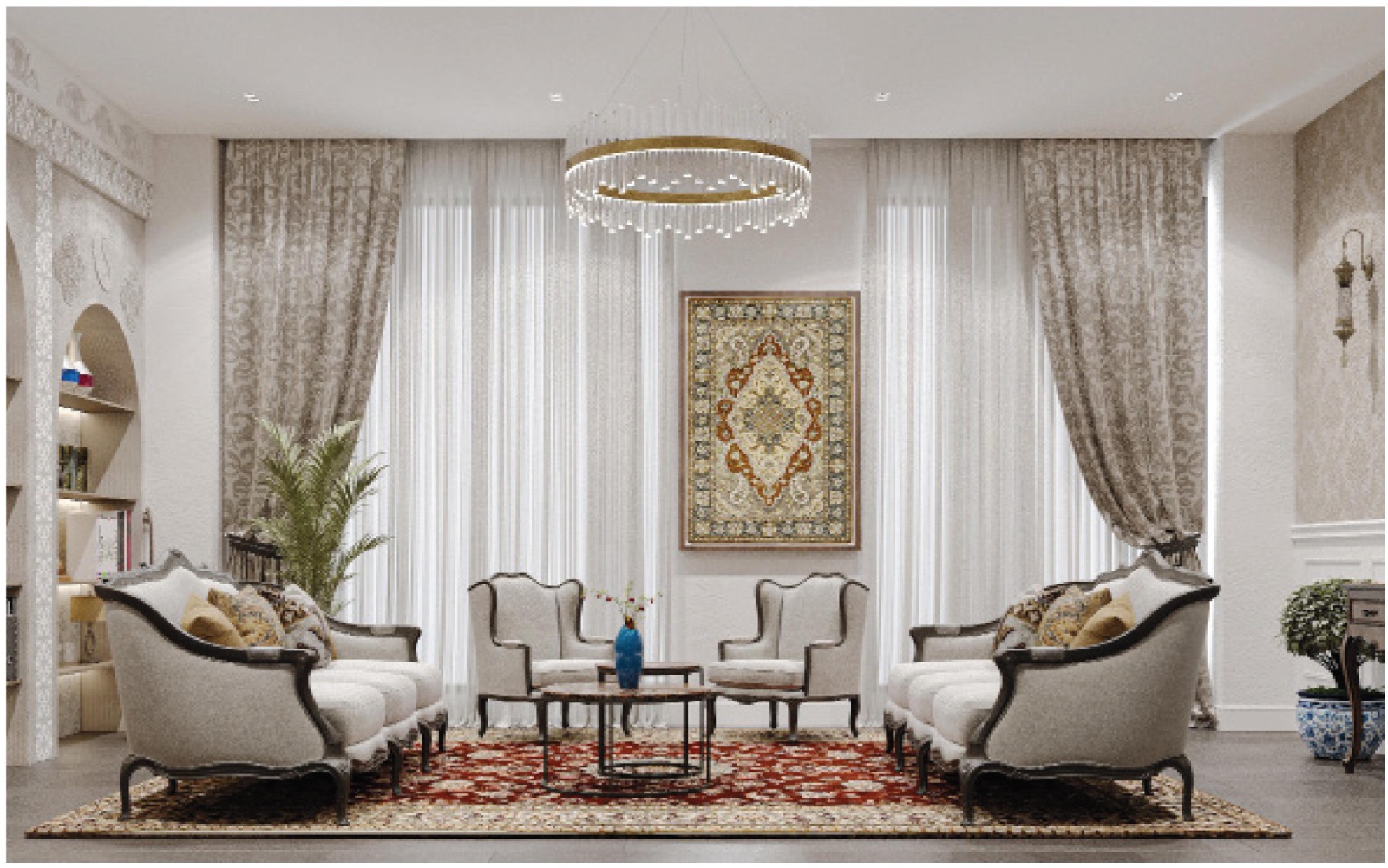
CICA VISITORS ROOM
Decorated and furnished by the Republic of Azerbaijan
About the Project:
The Republic of Azerbaijan, in its capacity as the CICA Chair for 2025–2026, has made a thoughtful contribution to the newly constructed CICA Headquarters by donating a beautifully decorated and fully furnished Visitor’s Room.
This contribution underscores Azerbaijan's commitment to fostering a welcoming and conducive environment for international engagement and demonstrates its dedication to supporting various initiatives through practical and valuable means. The newly appointed room enhances comfort and functionality for guests and delegates, reflecting Azerbaijan's hospitality and strong international partnerships.
Style and Concept:
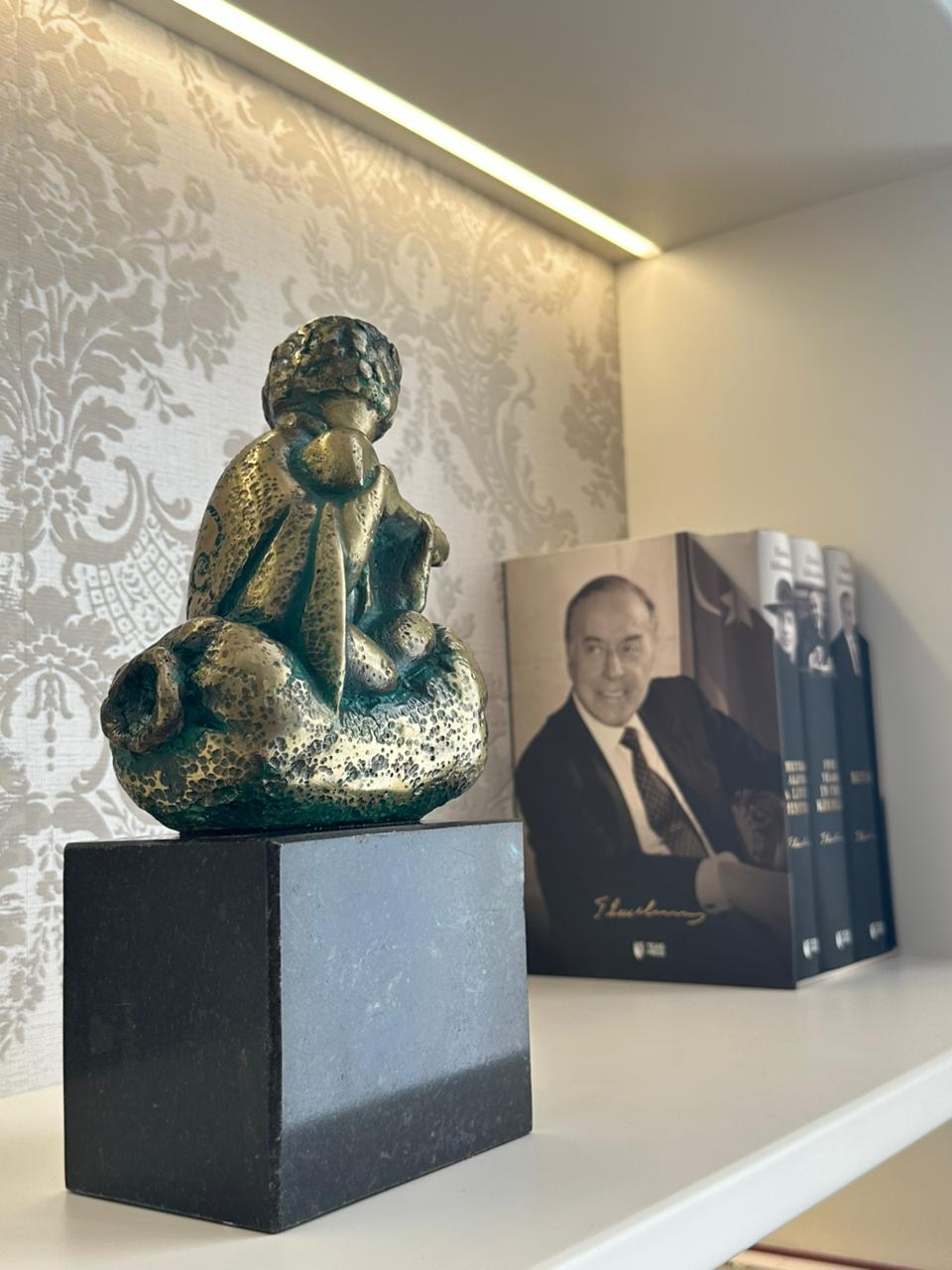
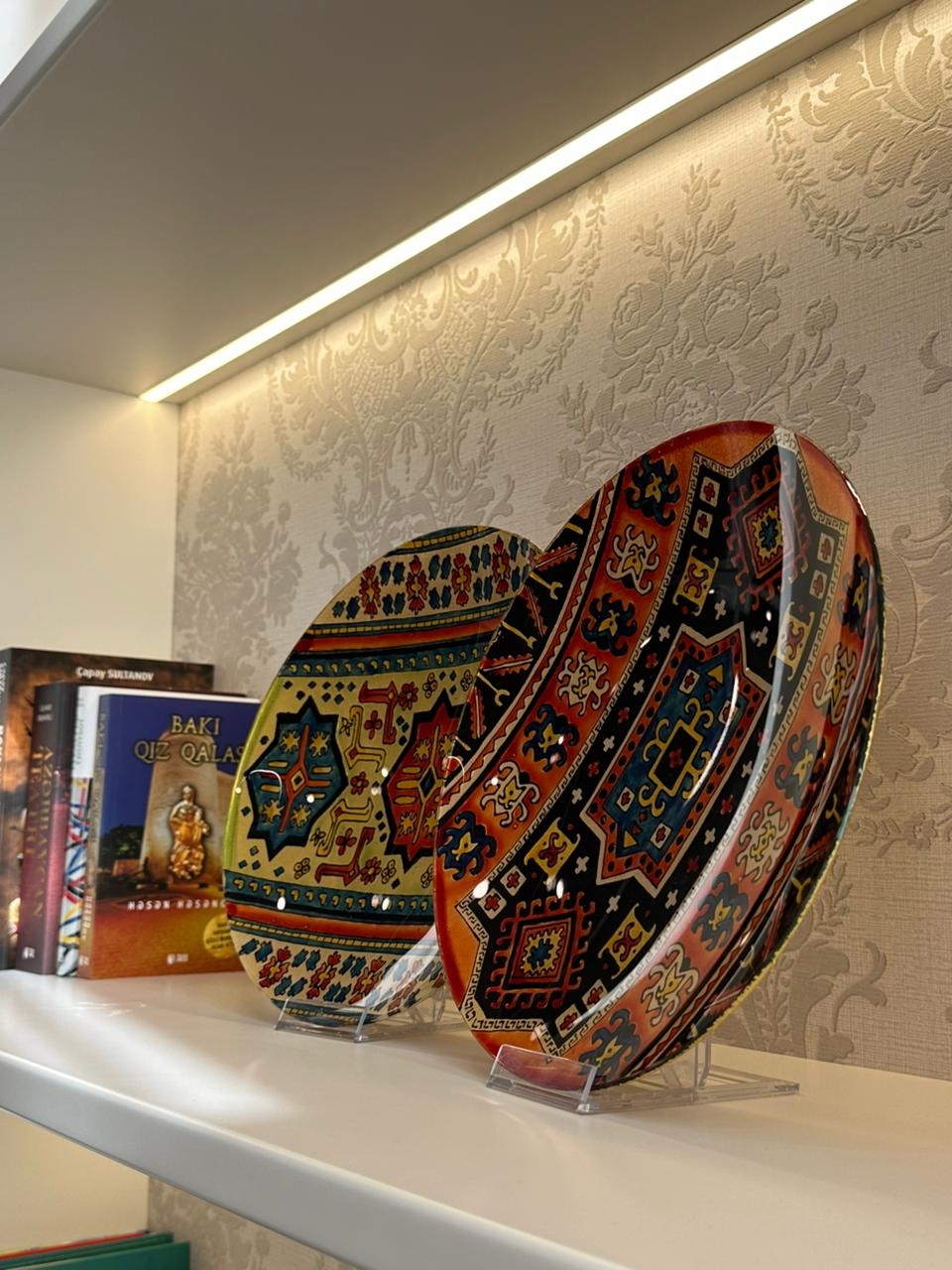
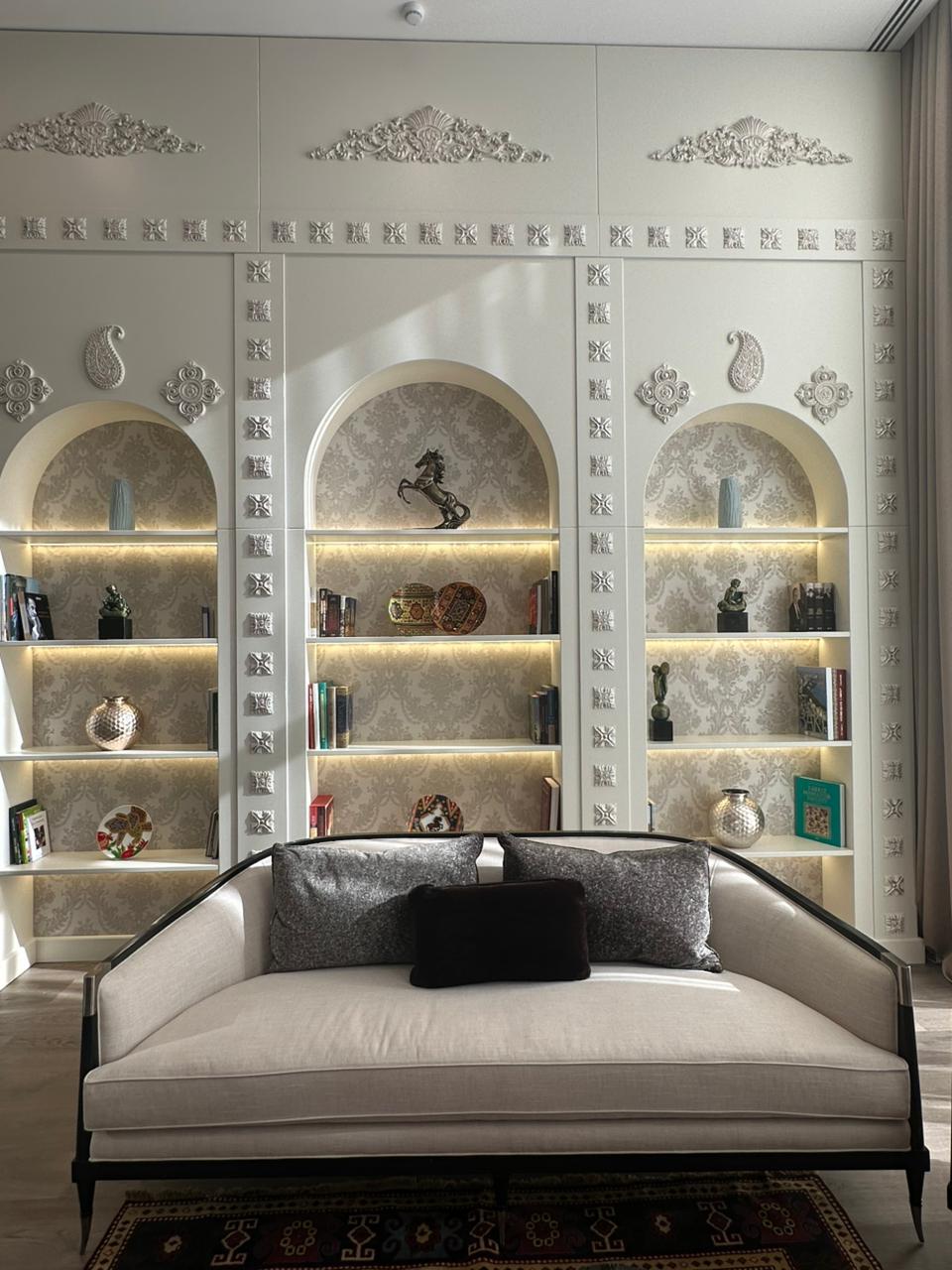
The project highlights key elements of the Azerbaijani national style — ornamental carpets, decorative carved details, ethnic-motif accessories on display shelves, and classic furniture pieces. The wallpaper patterns and decorative cushions on the sofa complements the overall concept. A central role is played by the oriental carpet on the floor and a traditional carpet panel adorning the wall.
Materials and Color Palette:
The color scheme is based on natural and warm tones — beige, golden, cream, and deep brown — underscoring the sophistication of the space. The wooden-framed, fabric-upholstered furniture combines classical elegance with modern sensibilities. A painting in the hallway reflects the country’s cultural richness and deep appreciation of the arts.
Carpet: A Symbol of Culture and Homely Warmth
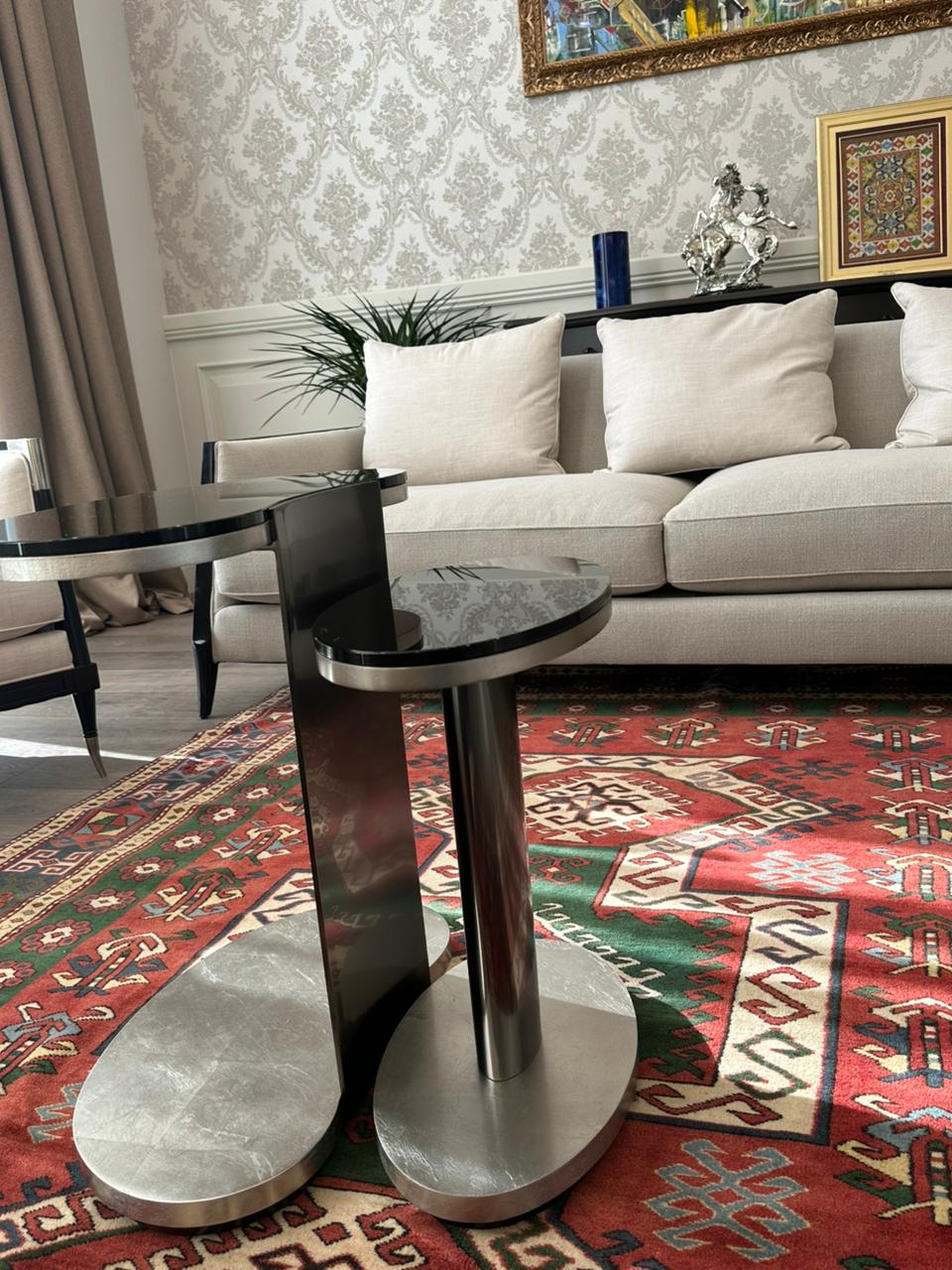
The Azerbaijani carpet placed at the center of the room serves as both a visual focal point and the spiritual heart of the interior. For centuries, such carpets have been an integral part of the living space, with each motif and color carrying deep symbolic meaning:
Woven by the hands of skilled craftswomen, this carpet brings not only decorative beauty but also an atmosphere of comfort and security reminiscent of a traditional Azerbaijani home.
Ornaments and the “Buta” Motif: The Flame of Life
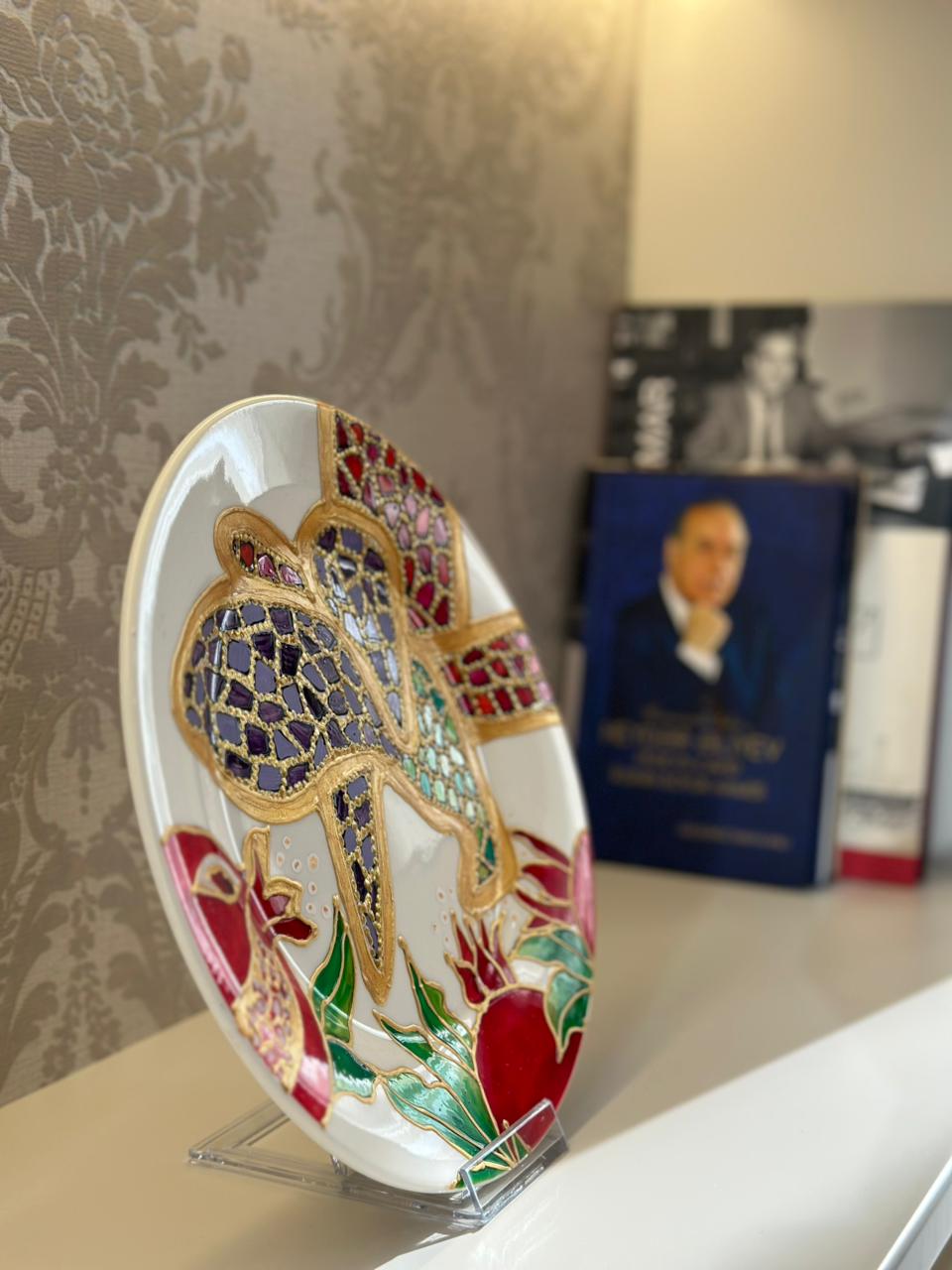
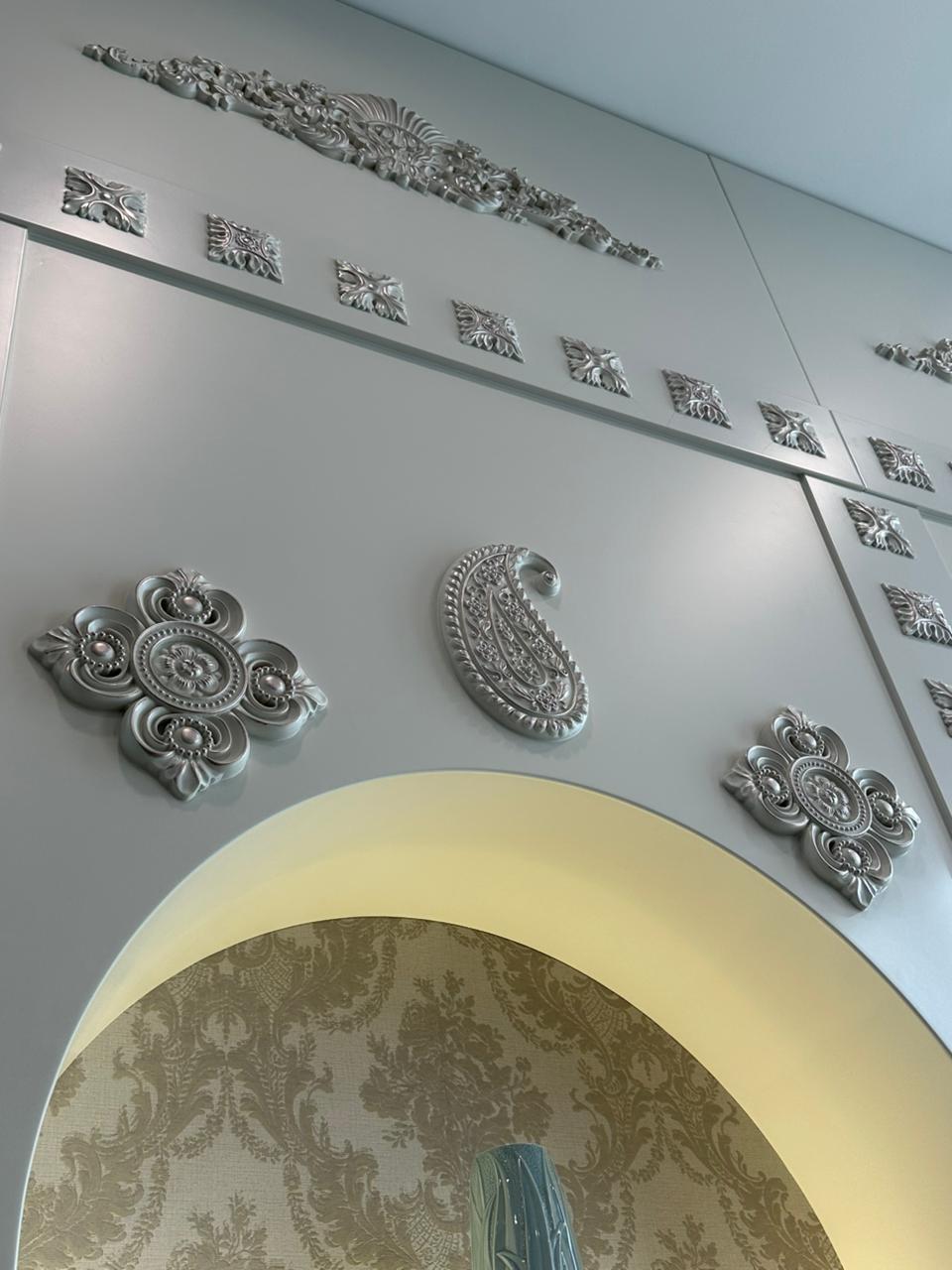
A distinctive feature of the design is the use of national ornaments in the wall niches. The central motif is the buta — a symbol of eternal flame, the origin of life, abundance, and blessing. Widely used in Azerbaijani carpet weaving, metalwork, embroidery, and architecture, the buta reflects the continuity of cultural heritage and the energy of new life.
Shebeke-Style Ornaments: Symbols of Light and Harmony
The niches and borders are decorated with shebeke-style ornaments — intricate wood and stone lattice patterns inspired by the architecture of the Sheki Khan’s Palace and the historic buildings of Icherisheher in Baku. These motifs lend refinement, historical depth, and vibrancy to the design through their interplay with light.
National Art: A Vivid Tapestry
A woven panel depicts scenes of everyday Azerbaijani life — bustling bazaars, rural villages, and horsemen. The image of the horse holds a special place in Azerbaijan’s history as a symbol of freedom, speed, strength, and resilience. The vivid colors of the artwork energize the space, adding liveliness and a contemporary spirit.
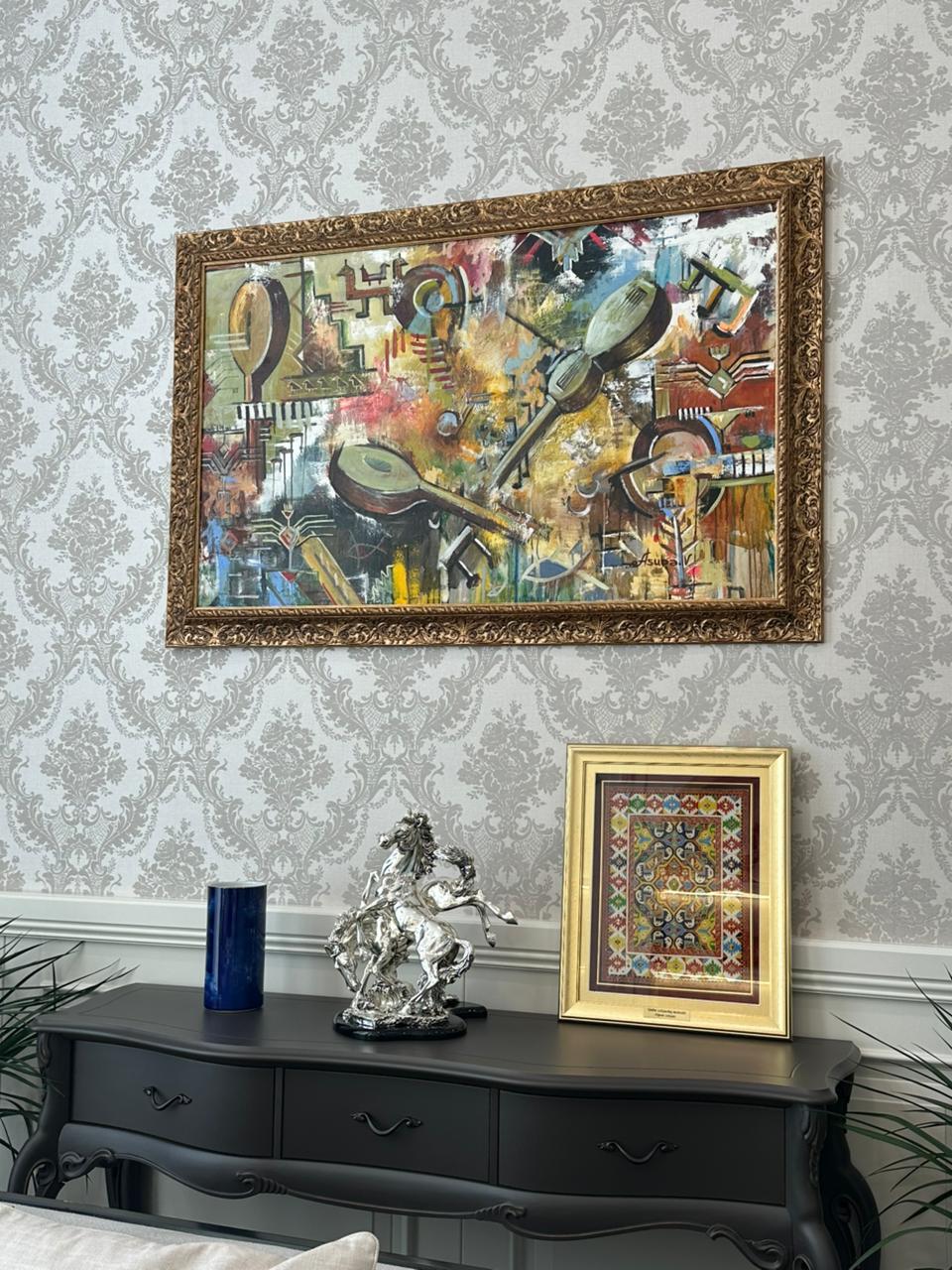
Painting Muğam by Asud Namazova
This oil on canvas by contemporary Azerbaijani artist Asud Namazova features stylized images of the saz and tar, traditional musical instruments, presented in an abstract, modernist composition. The background is filled with dynamic brushstrokes and warm hues, evoking movement, vitality, and cultural richness. Ornamental and symbolic motifs woven into the canvas offer a modern reinterpretation of Azerbaijan’s artistic heritage.
Ceramics and Decorative Elements: Refinement and Historicism
Traditional ceramic schools from the regions of Ganja, Shamakhi, and Nakhchivan inspire white and blue ceramic vases and vessels featured in the interior. Blue symbolizes the sky, infinity, spiritual serenity, and purity, while white stands for innocence, honesty, and light. The plant and floral motifs pay tribute to nature, harmony, and the energy of life. These vases not only bring decorative elegance but also reflect the deep cultural traditions and refined aesthetics of the Azerbaijani people.
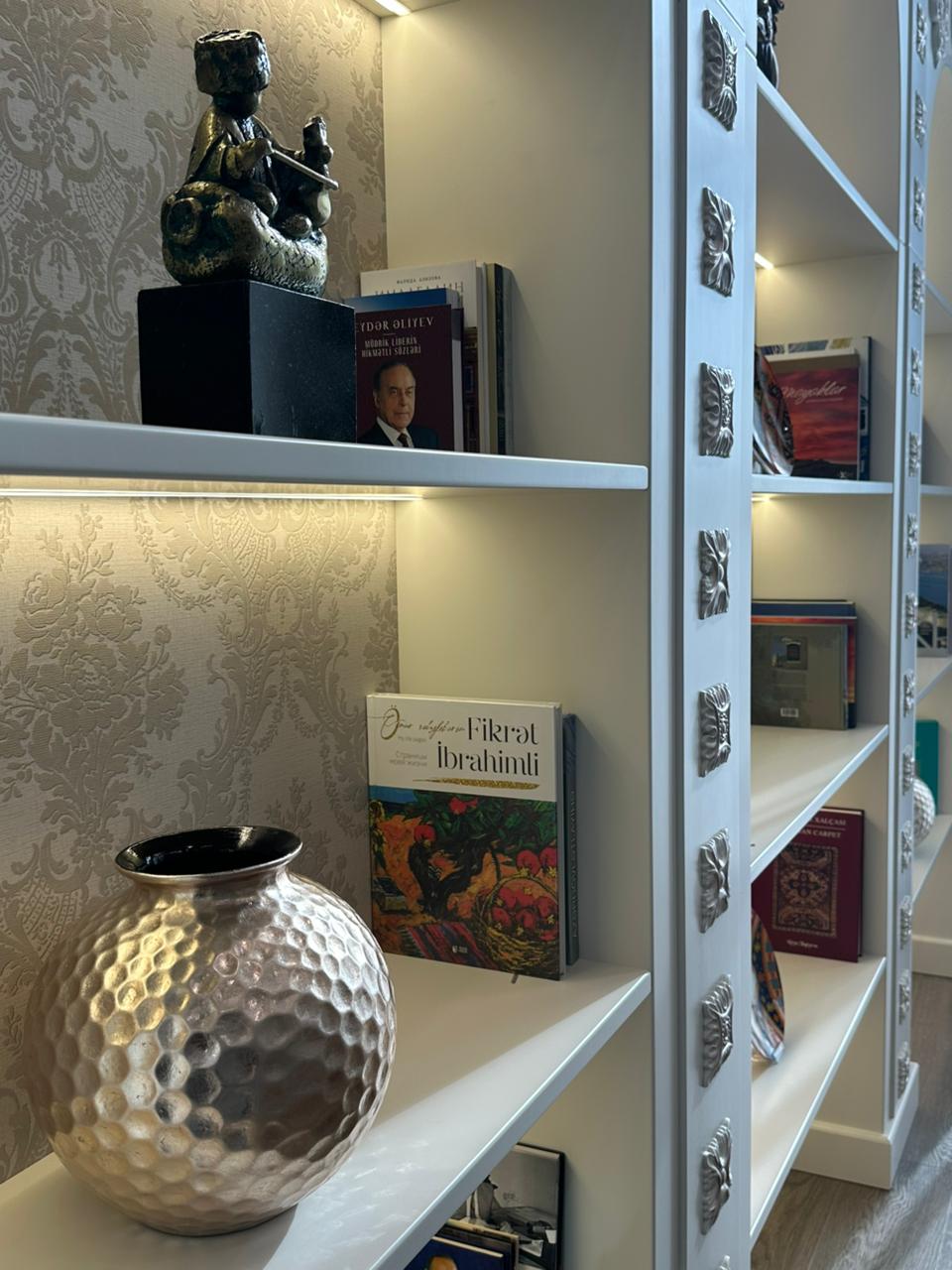
Cultural Memory as a Design Element
Ceramic details lend visual lightness to the interior while subtly introducing the codes of traditional culture into a modern setting. This approach reflects the philosophy of the entire project — the integration of national ornamentation into contemporary design.
The Horse Sculptures: A Symbol of Freedom and Strength
Historically, the horse played a vital role in Azerbaijani life — in agriculture, transport, and warfare. The sculpture adds both aesthetic completeness and cultural depth to the space, infusing it with a sense of energy and movement.
Horses also appear in the vibrant national painting, depicted in scenes of rural life, celebrations, and races. Their dynamic movement and the vivid palette breathe life and momentum into the interior. Horses further symbolize the spirit of the people, their love of freedom, and their profound connection to the land.

